

Workplace injury claim process: your 2026 guide
The workplace injury claim process is the formal procedure that gives injured workers access to medical treatment and wage replacement after a work-related injury or illness. Known formally as the workers’ compensation process in Australia, it follows a structured sequence of steps from reporting the injury through to receiving benefits. Getting each step right matters because missed deadlines or incomplete paperwork are the most common reasons claims are delayed or denied. This guide walks you through every stage in plain language so you can protect your rights and secure the compensation you deserve.
What are the essential steps in the workplace injury claim process?
Filing a workplace injury claim follows a clear sequence. Skipping or rushing any step creates gaps that insurers use to reduce or reject your payout.
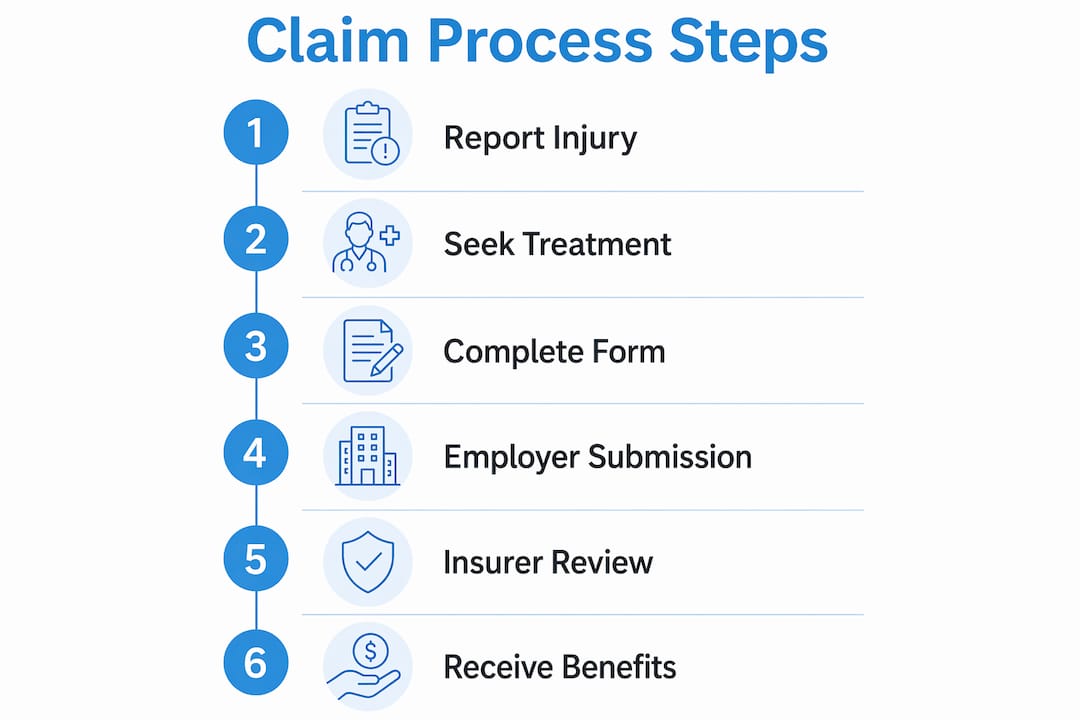
Step 1: Report the injury to your employer immediately. Tell your employer about the injury in writing as soon as possible. Verbal reports are easy to dispute later. A written record, even a simple email or text message, creates a timestamp that protects you. Delayed injury reporting is the single most common cause of claim denial, so act the same day if you can.
Step 2: Seek medical treatment and document everything. Visit a doctor promptly and tell them the injury happened at work. Your treating doctor’s certificate is one of the most critical documents in your claim. Keep every receipt, referral letter, and test result from this point forward.

Step 3: Complete the claim form accurately. Your employer must provide you with the relevant workers’ compensation claim form. Fill it in with specific details: the date, time, location, and exact nature of the injury. Vague descriptions give insurers grounds to question your claim.
Step 4: Your employer submits the claim to their insurer. Once you hand in the completed form, your employer is required to forward it to their workers’ compensation insurer. In many Australian jurisdictions, this must happen within a set number of days. Follow up in writing to confirm it was submitted.
Step 5: The insurer reviews and decides. The insurer investigates the claim, which may include requesting medical records or an independent medical examination. They will then accept, dispute, or request more information. Appeal procedures exist but require timely action and the correct paperwork, so track every communication date carefully.
Step 6: Receive benefits and manage ongoing treatment. Approved claims provide weekly wage payments and cover medical expenses. Keep attending medical appointments and submit updated certificates on time to keep payments active.
Pro Tip: Never sign an accident report without reading it carefully. Employers sometimes record events in ways that minimise their liability. You have the right to amend or add to any report before signing.
How do workplace injury compensation claims differ by claim type?
Not all workplace injury claims follow the same path. The type of claim you file determines what benefits you receive and how much total compensation is possible.
Workers’ compensation claims
Workers’ compensation is a no-fault system that pays medical treatment costs and approximately 67% of lost wages. You do not need to prove your employer was negligent. The trade-off is that workers’ compensation excludes pain and suffering, punitive damages, and full wage replacement. This makes it faster and more predictable, but it caps your recovery.
Personal injury claims against third parties
If your injury was caused by someone other than your employer, such as a contractor, equipment manufacturer, or another driver, you may have a separate personal injury claim. These claims require proving negligence, which takes more time and effort. The reward is significantly greater. Personal injury lawsuits may pay three to ten times more than workers’ compensation due to pain and suffering, full lost wages, and in some cases punitive damages.
Dual-track claims: running both at once
The most missed opportunity in workplace injury cases is failing to identify a potential third-party personal injury claim alongside your workers’ compensation claim. Running both simultaneously is called a dual-track approach, and it can yield significantly higher total recovery. A slip and fall lawyer or workers’ compensation specialist can assess whether a third party contributed to your injury.
| Claim type | Fault required | Covers pain and suffering | Typical benefit level |
|---|---|---|---|
| Workers’ compensation | No | No | Medical costs plus ~67% of wages |
| Personal injury (third party) | Yes | Yes | Potentially 3 to 10 times higher |
| Dual-track (both combined) | Both apply | Yes (PI component) | Maximum possible recovery |
One important detail with dual-track claims: your workers’ compensation insurer holds a subrogation lien on any third-party settlement you receive. This means they can claim back some of what they paid you. The good news is that lien negotiation typically reduces that repayment by 33 to 40%, saving claimants thousands of dollars.
What documents do you need for a workplace injury claim?
A strong workplace injury claim documents checklist is your best defence against delays and disputes. Insurers look for gaps in the paper trail, so your job is to leave none.
The core documents you need to gather and maintain are:
- Injury report form. The written record you submit to your employer on the day of the injury or as soon as possible after. Include the exact date, time, location, and how the injury occurred.
- Medical certificates and treatment records. Every certificate from your treating doctor, specialist referrals, test results, and invoices for treatment. These prove the injury exists and is work-related.
- Photographs. Photos of the injury itself and the accident site taken as close to the incident as possible. Conditions change quickly, so photograph everything before anything is cleaned up or repaired.
- Witness statements. Written statements from colleagues or others who saw the incident or its immediate aftermath. Names, contact details, and a brief account of what they observed.
- Claim forms. Copies of every form you submitted to your employer and every acknowledgement you received in return.
- Communication records. Emails, letters, and notes from phone calls with your employer, the insurer, and any medical providers. Date and save everything.
Pro Tip: Create a dedicated folder, physical or digital, on the day of your injury and add every document to it immediately. Workers who document work injury for claim purposes from day one consistently have stronger outcomes than those who reconstruct records weeks later.
The statute of limitations for workplace injury claims in Australia is typically one to three years depending on the jurisdiction and claim type. Missing that window forfeits your rights entirely, which makes early and thorough documentation non-negotiable.
How do you handle challenges and delays in your claim?
Even well-prepared claims hit obstacles. Knowing what to expect means you can respond quickly rather than lose ground.
Common reasons claims are delayed or denied include:
- Late injury reporting or no written record of the incident
- Inconsistencies between the accident report and your medical records
- Failure to attend an independent medical examination requested by the insurer
- Incomplete claim forms or missing supporting documents
- The insurer disputing whether the injury is work-related
When the insurer requests additional information, respond in writing within their stated timeframe and keep a copy of everything you send. If your claim is denied, you have the right to appeal through the relevant workers’ compensation tribunal or board in your state. In New South Wales, that body is the Personal Injury Commission. In Victoria, it is WorkSafe Victoria. Each has its own appeal forms and deadlines, so act immediately after receiving a denial.
Avoid the common mistake of accepting a denial as final. Many initial denials are overturned on appeal when the worker provides additional medical evidence or corrects a procedural error in the original submission. Seeking specialised legal advice early reduces the risk of undervaluation or rejection, and No Win No Fee arrangements make that advice financially accessible for most injured workers.
If your injury is severe and has left you permanently unable to work, a separate TPD claim through your superannuation fund may also be available alongside your workers’ compensation benefits.
Key takeaways
A successful workplace injury claim depends on reporting promptly, documenting thoroughly, and understanding which claim types apply to your situation.
| Point | Details |
|---|---|
| Report in writing immediately | Written injury reports with specific details protect your claim from the start. |
| Collect all medical records | Every certificate, invoice, and referral strengthens your case against insurer disputes. |
| Know your claim type | Workers’ compensation covers basics; personal injury claims can pay three to ten times more. |
| Never miss deadlines | The statute of limitations is one to three years; late claims forfeit all rights. |
| Seek legal advice early | Specialised advice prevents undervaluation and opens dual-track claim opportunities. |
What I have seen workers get wrong, and how to avoid it
After working with injured workers across Sydney and New South Wales, the pattern I see most often is not dramatic. It is quiet. A worker gets hurt, tells their supervisor verbally, assumes everything is in hand, and then discovers three weeks later that nothing was formally submitted. By that point, the accident site has changed, witnesses have forgotten details, and the insurer has a ready-made argument that the injury was not serious.
The second most common mistake is treating workers’ compensation as the only option. Workers’ compensation is a guaranteed floor, not a ceiling. When a third party contributed to the injury, whether that is a negligent contractor, a faulty piece of equipment from an external supplier, or a vehicle incident on a work errand, a personal injury claim can run alongside the workers’ comp process and recover amounts that workers’ compensation simply cannot touch. Most injured workers never hear about this possibility because no one tells them to ask.
What I tell every client is this: document everything from minute one, and get a legal opinion before you accept any settlement offer. Insurers are experienced at resolving claims quickly and cheaply. You deserve to know the full value of what you are owed before you sign anything. The workers who recover the most are not the ones with the most severe injuries. They are the ones who treated their claim like the serious legal matter it is from the very beginning.
— Daniel
How Carelawyers can help with your claim
Dealing with an injury is hard enough without having to decode legal forms and insurer correspondence on your own.

Carelawyers is a Sydney-based personal injury and workers’ compensation law firm with a success rate of over 99% of claims won. The team specialises in both workers’ compensation and third-party personal injury claims, which means they can assess whether a dual-track approach applies to your situation from the first consultation. Every client speaks directly to their lawyer, with no intermediaries and no jargon. Carelawyers operates on a No Win No Fee basis, so there is no financial risk in getting advice. If you are unsure where your claim stands, speak with a personal injury lawyer at Carelawyers before accepting any offer.
FAQ
How long do I have to file a workplace injury claim in Australia?
The time limit varies by state and claim type but is generally one to three years from the date of injury. Missing this deadline forfeits your right to compensation, so report and document your injury as soon as possible.
What does workers’ compensation actually cover?
Workers’ compensation covers medical treatment costs in full and replaces approximately 67% of lost wages. It does not cover pain and suffering or punitive damages, which is why a personal injury claim may also be worth pursuing if a third party caused your injury.
Can I claim workers’ compensation and sue for personal injury at the same time?
Yes. If a third party such as a contractor or equipment manufacturer contributed to your injury, you can run both claims simultaneously. This dual-track approach can significantly increase your total compensation, though your workers’ compensation insurer will hold a lien on any third-party settlement.
What happens if my workplace injury claim is denied?
A denial is not final. You can appeal through the relevant state tribunal, such as the Personal Injury Commission in New South Wales. Provide additional medical evidence and correct any procedural errors in your original submission. Legal advice at this stage significantly improves your chances of a successful appeal.
Do I need a lawyer to file a workers’ compensation claim?
You do not legally need a lawyer to file, but legal advice early in the process reduces the risk of undervaluation, missed claim types, and procedural errors that lead to denial. No Win No Fee arrangements make professional advice accessible without upfront cost.


