

Work injury damages in NSW: what you’re owed
Work injury damages are compensation claims made by injured workers for economic losses caused by employer negligence under NSW workers compensation law. Unlike standard workers compensation benefits, these are fault-based claims under a modified common law system. They cover two specific losses: past earnings you could not receive due to your injury, and your future loss of earning capacity. Understanding what is work injury damages, and how the claim process works, can be the difference between a fair settlement and leaving money on the table.
What is work injury damages and who can claim it?
Work injury damages are defined under NSW legislation as fault-based claims for economic loss resulting from a workplace injury caused by employer negligence. This is not the same as standard workers compensation, which pays out regardless of fault. To access work injury damages, you must prove your employer’s negligence directly caused your injury.
Three core eligibility requirements apply:
- Employer negligence: You must demonstrate your employer failed in their duty of care and that failure caused your injury. This is a legal threshold, not just a workplace incident report.
- 15% permanent impairment: You must have at least 15% permanent impairment assessed and formally accepted by your insurer or the Personal Injury Commission. This assessment must be conducted by a certified permanent impairment assessor.
- Prior receipt of statutory lump sum payments: You must have received all lump sum payments for permanent impairment before your work injury damages claim can be settled.
The 15% threshold is the most common barrier workers face. Many injured workers have genuine, life-altering injuries that fall below this level. Without meeting it, a work injury damages claim simply cannot proceed, regardless of how strong the negligence evidence is.
Pro Tip: Get your permanent impairment formally assessed as early as possible. The impairment threshold and sequencing of lump sum payments are foundational to claim success. Starting this process late wastes time and resources.
How do work injury damages differ from standard workers compensation?
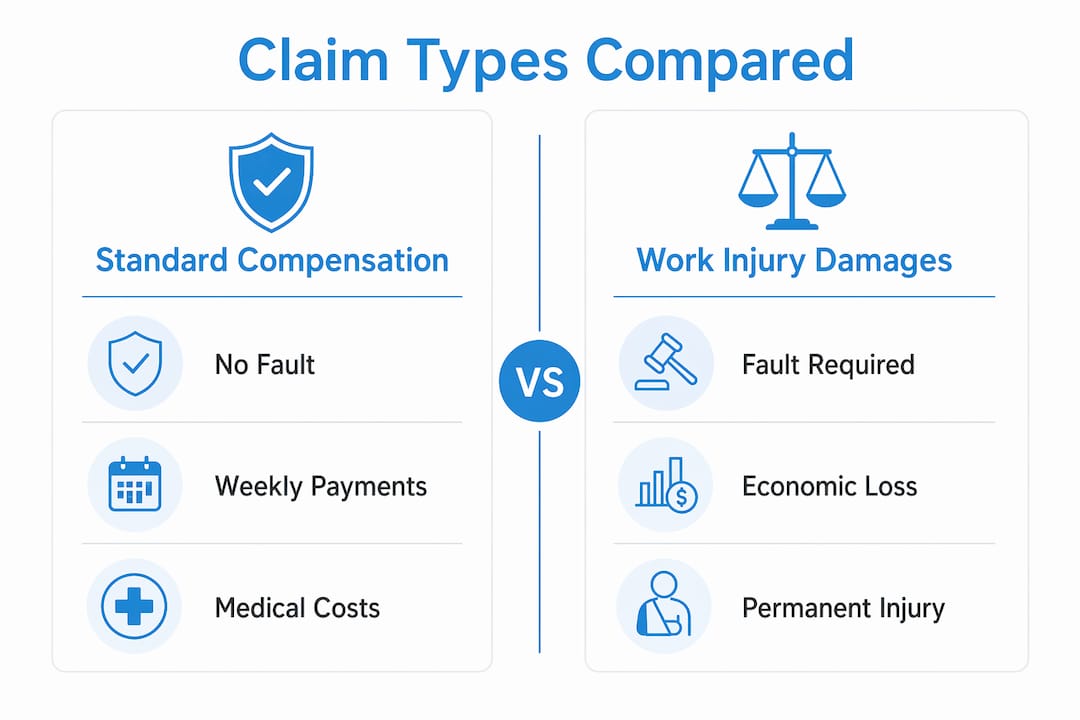
Standard workers compensation in NSW operates on a no-fault basis. If you are injured at work, you receive weekly payments, medical expense coverage, and rehabilitation support without needing to prove your employer did anything wrong. Work injury damages operate on an entirely different legal footing.

| Feature | Standard Workers Compensation | Work Injury Damages |
|---|---|---|
| Fault required? | No | Yes, employer negligence must be proven |
| What it covers | Weekly payments, medical and rehab costs | Past loss of earnings and future earning capacity only |
| Threshold required? | No | Yes, 15% permanent impairment |
| Ongoing entitlements after claim? | Yes, while eligible | No, settlement extinguishes further entitlements |
| Claim type | Statutory | Modified common law |
Work injury damages claims focus exclusively on economic loss. They do not cover medical or hospital expenses, which remain within the standard workers compensation system. This distinction matters because many workers assume a lump sum will cover all their future costs. It will not.
Settling a work injury damages claim also carries a significant consequence. A settlement extinguishes all further entitlement to workers compensation payments for that injury. Once you settle, your weekly payments stop permanently. This makes the decision to settle one of the most financially consequential choices an injured worker can make.
Pro Tip: Before accepting any settlement offer, calculate your projected future medical costs separately. Work injury damages will not cover them. Factor this into your total financial picture before agreeing to any figure.
What is the step-by-step process for making a claim?
The workplace injury claim process for work injury damages follows a specific sequence. Skipping steps or getting the order wrong can delay or invalidate your claim entirely.
- Report and document your injury. Notify your employer and lodge a workers compensation claim with their insurer immediately. Detailed records of how the injury occurred are critical for establishing negligence later.
- Receive standard workers compensation benefits. Weekly payments and medical coverage begin under the no-fault system. Continue receiving these while your condition stabilises.
- Undergo permanent impairment assessment. Once your injury has stabilised, a certified assessor evaluates your permanent impairment level. The insurer or the Personal Injury Commission must formally accept this assessment.
- Receive all statutory lump sum payments. You must receive all permanent impairment lump sum payments before your work injury damages claim can be finalised. This sequencing is not optional under NSW law.
- Build your economic loss evidence. Gather payslips, tax returns, employment records, and expert reports quantifying your past income loss and future earning capacity reduction. This evidence forms the financial backbone of your claim.
- Engage with the insurer or Personal Injury Commission. Negotiations occur at this stage. If agreement cannot be reached, the Personal Injury Commission can determine the matter.
- Settle or litigate. Most claims settle through negotiation. A small number proceed to formal determination.
A common pitfall at step five is focusing only on injury symptoms rather than building quantifiable economic loss evidence. Practitioners consistently note that effective claims require satisfying three elements: employer negligence, impairment threshold, and quantifiable economic loss. Injury severity alone is not enough.
What happens after you settle a work injury damages claim?
Settlement is not simply receiving a cheque and moving on. Several financial consequences follow that many injured workers do not anticipate.
- Weekly payments cease permanently. Once you settle, your entitlement to ongoing workers compensation weekly payments for that injury ends. There is no going back if your condition worsens.
- Medical benefits also end. The settlement extinguishes your right to claim medical, hospital, and rehabilitation expenses under workers compensation for that injury.
- Repayment of weekly payments may apply. Weekly payments already received may need to be repaid from your settlement amount. This can significantly reduce the net figure you actually receive.
- Contributory negligence reduces your payout. If your own actions contributed to the injury, damages can be reduced proportionally. A worker found 20% at fault receives 20% less in damages.
- The headline figure is not your take-home amount. Legal fees, repayment obligations, and negligence reductions all affect the final amount you receive.
Settlement figures in work injury damages claims are adjusted for weekly benefits already paid and apportioned for any worker negligence, meaning the actual compensation received can differ substantially from the agreed settlement amount.
Long-term financial planning is critical before signing any settlement deed. Consider your future medical costs, your capacity to return to work, and how long your settlement needs to sustain you. Your workplace rights after serious injury do not disappear at settlement, but your financial entitlements under workers compensation do.
Key takeaways
Work injury damages in NSW are fault-based economic loss claims requiring employer negligence, a 15% permanent impairment threshold, and prior receipt of all statutory lump sum payments before settlement can proceed.
| Point | Details |
|---|---|
| Fault is mandatory | You must prove employer negligence caused your injury to access work injury damages. |
| 15% impairment threshold | Your permanent impairment must be assessed and accepted at 15% or above before you can claim. |
| Economic loss only | Work injury damages cover past earnings and future earning capacity, not medical or hospital costs. |
| Settlement ends entitlements | Accepting a settlement permanently extinguishes your ongoing workers compensation payments and medical benefits. |
| Net payout may be lower | Weekly payments already received and contributory negligence can reduce the final amount you take home. |
What i have learned from work injury damages claims
After years of working with injured workers and their families, the single biggest mistake I see is treating work injury damages as a straightforward extension of workers compensation. They are not. They are a separate legal pathway with strict prerequisites, and the consequences of getting the sequencing wrong are severe.
The 15% permanent impairment threshold catches people off guard more than any other requirement. Workers with genuinely debilitating injuries sometimes fall below it. When that happens, the entire fault-based claim collapses, regardless of how clear the employer’s negligence was. This is why I always advise getting impairment assessed early and formally, not waiting until you feel ready to pursue a claim.
Settlement consequences are equally misunderstood. I have seen workers accept headline figures without realising how much will be deducted for weekly payments already received, or how a finding of contributory negligence will reduce their payout. The number on the settlement deed is rarely the number that lands in your account.
The most important thing you can do is get specialist legal advice before you engage with an insurer on work injury damages. Insurers are experienced negotiators. You deserve someone equally experienced in your corner.
— Daniel
Get expert legal help for your work injury claim
Navigating work injury damages in NSW is genuinely complex. The eligibility thresholds, sequencing requirements, and settlement consequences create real risks for workers who go it alone.

Carelawyers specialises in workers compensation and personal injury law in Sydney and across NSW. With a success rate of over 99% of claims won, the team at Carelawyers provides direct, plain-English advice without the jargon or the runaround. You speak to your lawyer, not a case manager. If you are ready to understand your entitlements and pursue the compensation you deserve, the workers compensation lawyers at Carelawyers are ready to help. For broader personal injury support, visit the personal injury lawyers page to explore your options.
FAQ
What does work injury damages actually cover?
Work injury damages cover past loss of earnings and future loss of earning capacity only. They do not cover medical expenses, hospital costs, or rehabilitation, which remain within the standard workers compensation system.
Do i need to prove my employer was at fault?
Yes. Work injury damages are fault-based claims. You must prove your employer’s negligence caused your injury. Without this, the claim cannot proceed regardless of your impairment level.
What is the 15% permanent impairment threshold?
The 15% threshold is the minimum level of permanent impairment you must have assessed and formally accepted before you can pursue a work injury damages claim in NSW. It is assessed by a certified permanent impairment assessor.
Will settling affect my ongoing workers compensation payments?
Yes. Settling a work injury damages claim permanently extinguishes your entitlement to ongoing workers compensation weekly payments and medical benefits for that injury.
Can my payout be reduced if i was partly at fault?
Yes. If your own negligence contributed to the injury, your damages are reduced proportionally. A 25% finding of contributory negligence means a 25% reduction in your final payout.


