

Why insurers deny serious injury claims: your 2026 guide
Why insurers deny serious injury claims and what to do right now
Getting a denial letter after a serious injury is a gut punch. You’re already dealing with pain, lost income, and uncertainty, and now the insurer is saying no. Here’s what you need to know straight away: most denials in Australia are tactical negotiating positions rather than definitive legal conclusions, and a significant number are successfully overturned by claimants who respond with the right evidence and process.
The most common reasons why an insurer denies a serious injury claim include:
- Disputed fault or causation — the insurer argues the injury wasn’t caused by the event you’ve described
- Insufficient or inconsistent medical evidence — your records don’t clearly establish severity or incapacity
- Pre-existing conditions — the insurer attributes your symptoms to something that predates the incident
- Late reporting or delayed treatment — procedural grounds based on notification timing
- Policy exclusions — clauses covering wear and tear, maintenance failure, or specific event types
- Non-disclosure or misrepresentation — alleged inaccuracies in your application or claim form
- Fraud allegations — the most serious ground, requiring the insurer to prove intent
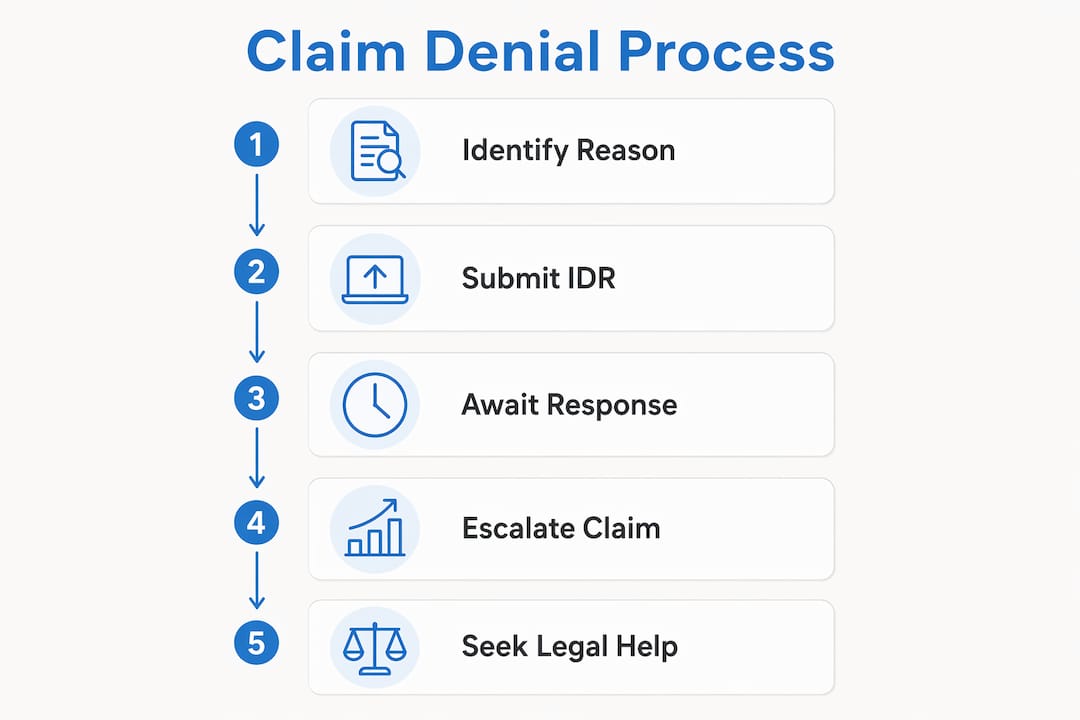
None of these automatically ends your claim. Your immediate steps after receiving a denial:
- Read the denial letter in full and note every specific reason and policy clause cited
- Request a copy of your full policy document if you don’t already have one
- Write down a timeline of your injury, treatment, and all insurer contact
- Do not sign any settlement documents or accept any payment without legal advice
- Lodge a formal complaint through the insurer’s Internal Dispute Resolution (IDR) process
- If IDR fails, escalate to the Australian Financial Complaints Authority (AFCA) or the Personal Injury Commission (PIC) in NSW
Time matters here. Deadlines for challenging denials are strict, and missing them can permanently close the door on your appeal.
Table of Contents
- Common reasons serious injury claims are denied
- How to respond effectively after your serious injury claim is denied
- How the Internal Dispute Resolution process works in Australia
- External dispute resolution options when IDR doesn’t resolve your claim
- Why legal advice can make the difference in overturning a denial
- Time limits you cannot afford to miss
- What happens if you accept the initial denial without appealing
- Key takeaways
Common reasons serious injury claims are denied
Understanding the specific ground your insurer used is the first step to contesting it. Each denial reason has weaknesses you can exploit.
Causation disputes. The insurer accepts something happened but argues the policy doesn’t cover the cause. In personal injury claims, this often means disputing whether your injury was caused by the incident or by a pre-existing vulnerability. These disputes almost always require independent medical evidence to resolve.
Insufficient medical evidence. Insurers look for consistent, detailed clinical records that link the injury directly to the event and establish ongoing incapacity. Gaps in treatment, vague GP notes, or a long delay between the incident and first medical contact all give insurers room to dispute severity.
Pre-existing conditions. This is one of the most commonly misused denial grounds. An insurer can only rely on a pre-existing condition if it can show that condition, not the incident, caused your current symptoms. A prior back complaint doesn’t automatically defeat a claim for a new spinal injury.
Late notification. Most policies require notification “as soon as reasonably practicable.” If you delayed, the insurer may argue you’ve breached a policy condition. Under section 54 of the Insurance Contracts Act 1984, however, an insurer generally cannot refuse a claim solely because of late notification unless the delay actually prejudiced their position.
Policy exclusions. Exclusion clauses covering wear and tear, gradual deterioration, or maintenance failure are frequently contested because they’re often ambiguous or applied too broadly. The insurer must prove it’s more likely than not that the exclusion applies.
Non-disclosure or misrepresentation. The insurer must prove you failed to take reasonable care when answering questions at application or renewal, that the omission was material, and that it would have changed their decision. This is a high bar, and innocent misrepresentation carries different consequences than fraudulent misrepresentation.
Fraud allegations. The insurer must prove you intended to deceive them or acted with reckless indifference. Minor discrepancies don’t meet this threshold. Get legal advice immediately if fraud is alleged, because the consequences extend beyond the claim itself.
Ambiguous policy wording. When a clause can reasonably be read two ways, Australian courts and AFCA tend to favour the interpretation that benefits the insured. Vague denial letters that don’t cite specific clauses are a sign the insurer’s position may be weak.
How to respond effectively after your serious injury claim is denied
A denial letter is the start of a process, not the end of one. Work through these steps methodically.
Read the denial letter carefully. Identify every specific reason given and every policy clause referenced. Vague denials with no clause citations are easier to challenge. Under the insurer’s duty of utmost good faith, they are legally required to provide clear, specific grounds.
Gather your medical evidence. Collect all treating doctor reports, specialist assessments, hospital records, and imaging results. Look for documentation that directly links your injury to the incident and establishes ongoing impact on your capacity to work.
Commission an independent medical assessment. If the insurer is relying on their own medical expert’s opinion, you have every right to obtain a contrary opinion. An independent specialist report addressing causation directly can shift the evidentiary balance significantly.
Document your timeline. Write out the key dates: when the incident occurred, when you first sought treatment, when you notified the insurer, and every subsequent interaction. This demonstrates you’ve met your obligations and can expose delays or procedural failures on the insurer’s side.
Prepare a written response. Address each denial ground specifically, reference the relevant policy clause, and attach your supporting evidence. A clear, structured response is far more effective than an emotional one.
Do not sign anything prematurely. Accepting a partial payment or signing a release document can extinguish your right to pursue the full claim. Read every document carefully before you put pen to paper.
Seek legal advice early. The earlier you involve a specialist personal injury lawyer, the better your position. A lawyer can identify grounds you may have missed, manage deadlines, and communicate with the insurer in terms they take seriously. Proper claim documentation is often the difference between a successful challenge and a failed one.
How the Internal Dispute Resolution process works in Australia
Before you can escalate a denied claim to any external body, you must go through the insurer’s Internal Dispute Resolution process. This is a legal requirement under Australian law, not optional.
Here’s how it works in practice:
- Lodge a formal written complaint with the insurer’s complaints team, not the claims officer who issued the denial. State clearly that you are disputing the denial and why.
- Reference specific policy clauses that support your position and attach all supporting evidence, including medical reports, your timeline, and any expert opinions.
- The insurer must respond within 30 calendar days for most claims. If they fail to meet this timeframe, you can escalate to AFCA immediately.
- IDR can overturn denials when the original decision was based on incomplete information, a misapplication of a policy clause, or an outdated medical opinion. Giving the insurer new evidence at this stage sometimes resolves the dispute without further escalation.
- Keep records of everything. Every email, every phone call summary, every letter. If the matter escalates, this paper trail becomes your evidence of the insurer’s conduct.
Pro Tip: Write “Formal IDR Complaint” clearly in the subject line of your letter or email. This triggers the insurer’s regulated complaint-handling obligations and starts the 30-day clock.
IDR has real limits. If the insurer’s position is entrenched or senior management has already signed off on the denial, the IDR response may simply confirm the original decision. That’s not a dead end. It’s the gateway to external escalation.

External dispute resolution options when IDR doesn’t resolve your claim
If the IDR process fails to overturn your denial, two main external pathways are available in Australia, both free to use.
Australian Financial Complaints Authority (AFCA). AFCA is a free, independent external dispute resolution service available to individual consumers. It can require insurers to provide documents, facilitate negotiation, and issue binding determinations that the insurer must comply with. Lodge your complaint at afca.org.au with your denial letter, IDR response, and all supporting evidence.
Personal Injury Commission (PIC) in NSW. For workers compensation disputes in New South Wales, the Personal Injury Commission handles disputes about whether an injury occurred, whether it happened at work, whether treatment is reasonably necessary, and the amount of compensation payable. Before lodging with the PIC, you must have first submitted a claim to the insurer or their employer. Note that the PIC cannot resolve all workers compensation disputes — coal miners, volunteer rescue workers, and workers with certain dust-related conditions must seek assistance from other agencies.
State-based commissions. Other states have their own equivalent bodies. Queensland’s Queensland Industrial Relations Commission handles certain workers compensation matters. Check the relevant state body for your jurisdiction.
What to bring to an external dispute. Your denial letter, the insurer’s IDR response, all medical evidence, your written timeline, and any correspondence with the insurer. The more organised your submission, the faster the process moves.
External adjudicators are empowered to order binding remedies, including compensation adjustments and mandating insurer compliance. Their decisions carry real weight, and insurers know it.
Why legal advice can make the difference in overturning a denial
Insurers have claims teams, legal departments, and years of experience managing disputes. Going up against that alone, while recovering from a serious injury, puts you at a structural disadvantage.
Here’s what a specialist lawyer actually does in a denied claim situation:
- Holds the insurer to their legal obligations. Insurers have a duty of utmost good faith under Australian law. A lawyer who knows this framework can identify when an insurer has issued a vague or unsubstantiated denial and use that against them in dispute proceedings.
- Manages deadlines. Missing a statutory deadline can permanently forfeit your right to appeal. A lawyer tracks every relevant timeframe across IDR, AFCA, and court processes.
- Builds the evidence case. Lawyers know which medical specialists carry weight with particular tribunals, how to frame causation arguments, and what documentation gaps need to be filled before lodging a dispute.
- Negotiates settlements. Many denied claims resolve through negotiation before reaching a formal hearing. An experienced lawyer knows when a settlement offer is fair and when to push harder.
- Represents you at hearings. If your matter proceeds to AFCA, a state commission, or court, having legal representation significantly improves your prospects.
Consulting a lawyer early in an insurance dispute is one of the most effective ways to protect your rights and meet critical deadlines. Carelawyers operates on a no win, no fee basis for eligible claims, meaning the cost of legal advice doesn’t have to be a barrier when you’re already dealing with the financial pressure of a serious injury.
Carelawyers has a success rate above 99% of claims won, with a client-centric approach that means you speak directly to your lawyer, not a case manager or paralegal. For injured individuals navigating a complex denial, that direct access matters.
Time limits you cannot afford to miss
Deadlines in insurance disputes are not flexible. Missing one can permanently end your ability to challenge a denial, regardless of how strong your case is.
- IDR response timeframe. Insurers must provide a final IDR response within 30 calendar days for most claims. If they don’t, you can escalate to AFCA without waiting.
- AFCA lodgement. You generally have two years from the date of the insurer’s final IDR response to lodge with AFCA. Check AFCA’s current rules for your specific claim type.
- Statutory claim deadlines. Under state workers compensation legislation, strict time limits apply to lodging the original claim and any subsequent dispute. In NSW, for example, the Workers Compensation Act 1987 sets specific notification and claim lodgement periods.
- Court proceedings. If your matter ultimately proceeds to litigation, limitation periods under state law apply. In NSW, the general personal injury limitation period is three years from the date of the injury, though exceptions exist.
- Act immediately after denial. Don’t wait to see if the insurer changes their mind. Start the IDR process within days of receiving the denial letter. Managing your claim timeline from the outset is the single most important thing you can do to preserve your options.
If you’re unsure which deadlines apply to your specific situation, get legal advice before doing anything else. Jurisdiction-specific rules vary, and a lawyer can map out your exact timeframes.
What happens if you accept the initial denial without appealing
Accepting a denial without challenging it is a decision with lasting consequences. Many claimants don’t realise what they’re giving up.
When you accept an insurer’s denial without appeal, you are effectively agreeing that their grounds for refusal are valid. If you later sign a release or accept a token payment, you may be contractually barred from pursuing the full value of your claim. The insurer’s position hardens, evidence becomes harder to gather as time passes, and witnesses’ memories fade.
The financial stakes are real. Serious injury claims can involve compensation for lost wages, medical expenses, rehabilitation costs, and pain and suffering. Understanding what damages you may be owed is worth doing before you accept any outcome. Accepting a denial on a claim worth tens of thousands of dollars, or more, because the process felt too hard is a cost that compounds over time.
There’s also a broader dynamic at play. Insurers know that many claimants won’t appeal. Some denials are issued precisely because the insurer expects the claimant to walk away. Challenging the denial, even through IDR alone, signals that you’re serious, and that changes the insurer’s calculus.
If your claim has been denied and you haven’t yet challenged it, the question isn’t whether it’s worth the effort. The question is whether you can afford not to.
Key takeaways
Most serious injury claim denials in Australia can be challenged successfully by understanding the insurer’s specific grounds, following the mandatory IDR process, and escalating to AFCA or a state commission if needed.
| Point | Details |
|---|---|
| Denials are often tactical | Most Australian insurer denials are negotiating positions, not final legal conclusions, and can be overturned with the right evidence. |
| IDR is mandatory first | You must go through the insurer’s Internal Dispute Resolution process before escalating to AFCA or a state commission. |
| 30-day IDR response rule | Insurers must provide a final IDR response within 30 calendar days; missing this lets you escalate immediately. |
| Deadlines are absolute | Missing statutory timeframes for lodging disputes can permanently forfeit your right to challenge a denial. |
| Legal advice improves outcomes | Early legal advice ensures deadlines are met, evidence is properly gathered, and the insurer’s duty of utmost good faith is enforced. |


