

Why consult a lawyer in an insurance dispute
Consulting a lawyer in an insurance dispute is the single most effective step you can take to protect your rights and increase your payout. Personal injury victims with legal representation received settlements averaging 3.5 times larger than those without a lawyer. That gap exists because insurers deploy trained adjusters whose job is to settle your claim for as little as possible. Understanding why legal counsel matters is not just reassuring. It is the foundation of a fair outcome.
Why consult a lawyer in an insurance dispute?
Legal representation in an insurance dispute means having a qualified professional who understands policy language, negotiation tactics, and your rights under Australian law. The industry term for this is “insurance dispute legal counsel,” though most people simply call it hiring an insurance claim attorney. Either way, the function is the same: a lawyer levels the playing field between you and a well-resourced insurer.
Insurance adjusters are trained negotiators whose primary goal is to minimise what the insurer pays out. They use questioning tactics, delays, and technical policy language to reduce claim values. A lawyer acts as a communications shield, handling all contact with the insurer so you do not accidentally say something that undermines your case.

The benefits of legal assistance for insurance claims go beyond negotiation. Lawyers identify coverage clauses you may have missed, challenge bad faith conduct, and know when to invoke formal dispute mechanisms like appraisal or arbitration. These are tools most policyholders do not know they have access to.
When should you consult a lawyer during an insurance dispute?
Most minor or straightforward claims do not require a lawyer. The real value of legal help appears in complex, high-stakes disputes involving bad faith conduct, coverage questions, or significant financial loss. Knowing when to call a lawyer is as important as knowing why.
Seek legal advice immediately if any of the following apply to your situation:
- You receive a “reservation of rights” letter from your insurer. This signals a potential conflict of interest and you may be entitled to independent legal counsel at the insurer’s cost.
- Your claim has been denied after multiple negotiations with no clear or valid reason given.
- The insurer disputes the value of your damage or loss by a significant margin.
- Your claim involves a serious injury, permanent disability, or large financial amount.
- You suspect bad faith conduct, such as unreasonable delays or misrepresentation of your policy terms.
- The dispute involves complex policy interpretation that requires legal expertise to unpack.
Consult a lawyer immediately if you receive a “reservation of rights” letter, face repeated denials, or encounter a disputed damage valuation. Early intervention consistently produces better outcomes than waiting until a dispute has escalated.
Pro Tip: Do not wait until you are about to miss a legal deadline. Limitation periods apply to insurance disputes in Australia, and missing them can permanently bar your claim. Seek advice as soon as you sense the insurer is not dealing with you fairly.
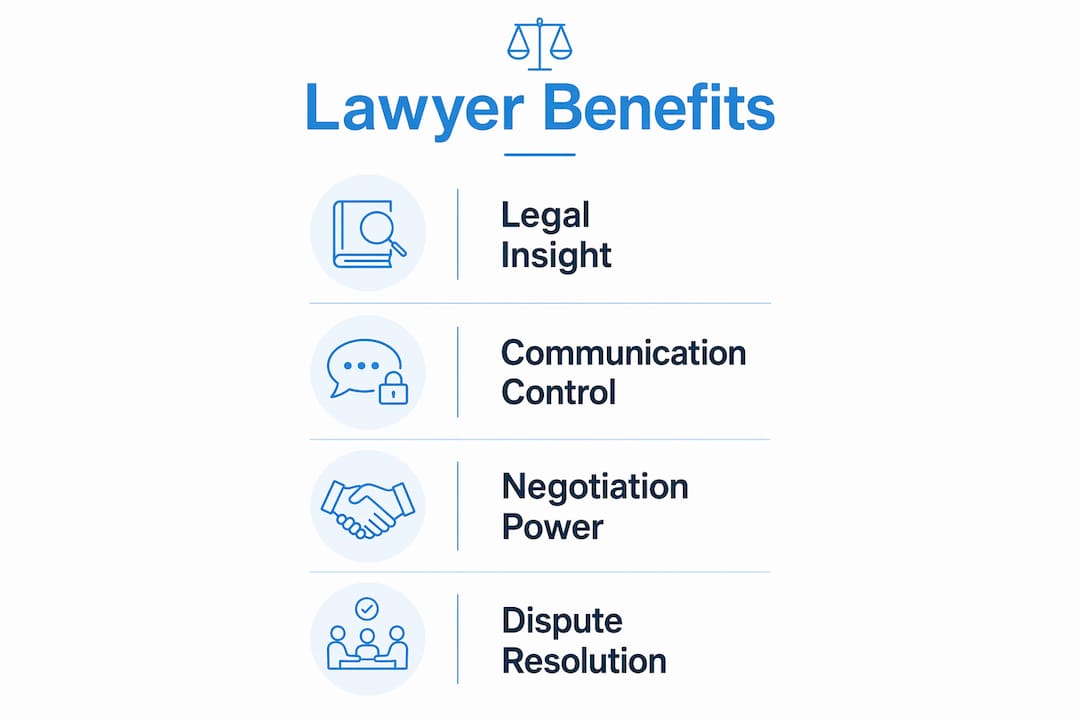
How can a lawyer improve the outcome of your insurance dispute?
A lawyer improves your claim outcome through four distinct mechanisms: legal knowledge, communication control, negotiation leverage, and access to formal dispute processes. Each one addresses a specific weakness that unrepresented claimants face.
Legal knowledge to challenge unfair decisions
Lawyers read policy documents the way adjusters do, which means they spot exclusions that do not apply, coverage clauses that do, and procedural errors the insurer may have made. A denial that looks final to you may be legally flawed and reversible. Carelawyers, for example, has built a track record of over 99% of claims won by identifying exactly these kinds of errors in insurer decisions.
Communication control
Insurance adjusters use questioning tactics to lower claim values. A single poorly worded statement from you can be used to justify a reduced payout or outright denial. When a lawyer handles all communications, that risk disappears. You stop being a source of information the insurer can use against you.
Negotiation leverage
Having an attorney contact an insurer often prompts improved settlement offers without any need for litigation. Insurers know that a represented claimant is more likely to pursue formal action, and that changes the negotiation dynamic immediately. Most legal involvement in insurance disputes aims to leverage a better settlement, not to go to court.
Formal dispute mechanisms
Lawyers know how to invoke appraisal clauses, request arbitration, and file complaints with the Australian Financial Complaints Authority (AFCA). These tools exist specifically to resolve disputes outside of expensive court proceedings. Most policyholders are unaware of them until a lawyer explains their options.
Pro Tip: Ask your lawyer whether invoking the AFCA dispute process is appropriate before agreeing to any settlement. AFCA decisions are binding on insurers, and the process is free for claimants.
You can also read more about your serious injury claim dispute options if your dispute involves a significant personal injury component.
What are the typical costs of hiring an insurance dispute lawyer?
Cost-benefit analysis should precede any decision to litigate. Legal fees can outweigh recoveries in smaller disputes, so an honest assessment from your lawyer is not just helpful. It is necessary.
The table below outlines the most common fee structures you will encounter when consulting a lawyer for an insurance dispute.
| Fee model | How it works | Best suited to |
|---|---|---|
| Contingency fee | Lawyer takes a percentage of the settlement; you pay nothing upfront | Personal injury and bad faith claims |
| No win, no fee | No payment unless your claim succeeds; costs covered if you win | Complex disputes with strong merits |
| Hourly billing | You pay for time spent regardless of outcome | Straightforward advisory work |
| Fixed fee | Set price for a defined scope of work | Initial consultations and document review |
Many insurance dispute attorneys work on contingency fees for bad faith cases, while others charge hourly. Initial consultations are typically obligation-free. The no win no fee model is particularly well suited to claimants who have a strong case but limited funds to pursue it.
Lawyers prioritise honesty about case strength and timelines rather than promising guaranteed payouts. A good lawyer will tell you plainly if your claim is unlikely to justify the cost of litigation. That candour is itself a form of protection.
What practical steps should you take when consulting a lawyer?
Preparation before your first consultation directly affects how useful that meeting will be. A lawyer can only assess your case accurately if you bring the right information.
- Gather all policy documents. Locate your full insurance policy, including any endorsements or schedules. Bring the declarations page, which summarises your coverage limits and exclusions.
- Compile all correspondence. Collect every letter, email, and written communication between you and the insurer. This includes the original claim, any denial letters, and all follow-up exchanges.
- Document your loss or injury. Photographs, medical reports, repair quotes, receipts, and witness statements all strengthen your position. Organise these chronologically before the meeting.
- Write down a clear timeline. Note the date of the incident, when you lodged the claim, and every significant event since. Lawyers work faster when the facts are already in order.
- Prepare your questions. Ask the lawyer about their experience with similar disputes, their fee structure, the likely timeline, and their honest assessment of your claim’s strength.
Understanding the role of your insurer after an accident can also help you identify where the dispute process has gone wrong before you walk into that first meeting.
Key takeaways
Consulting a lawyer in an insurance dispute is the most reliable way to protect your rights, challenge unfair decisions, and secure a settlement that reflects the true value of your claim.
| Point | Details |
|---|---|
| Legal representation increases payouts | Represented claimants receive settlements averaging 3.5 times larger than unrepresented ones. |
| Know when to act | Seek legal advice immediately after a denial, a “reservation of rights” letter, or a disputed valuation. |
| Lawyers control communications | A lawyer prevents self-damaging statements and handles all insurer contact on your behalf. |
| Understand the fee model | Contingency and no win no fee arrangements mean many claimants pay nothing unless they win. |
| Prepare before your consultation | Bring policy documents, correspondence, and a written timeline to maximise your first meeting. |
What I have learned from watching people fight insurers alone
The most consistent pattern I see in insurance disputes is this: people wait too long. They spend months going back and forth with adjusters, making concessions, and accepting explanations that simply do not hold up legally. By the time they seek advice, they have already weakened their position in ways that are difficult to reverse.
The second pattern is underestimating the insurer’s advantage. Adjusters handle dozens of claims every week. They know the policy language, the negotiation tactics, and the pressure points. A first-time claimant facing that experience gap without support is at a structural disadvantage from the first phone call.
What surprises most people is how quickly the dynamic shifts once a lawyer is involved. Insurers respond differently to represented claimants. Offers improve. Timelines tighten. The insurer’s tone changes because the risk calculation changes for them. That shift does not always require litigation. Often, it just requires a letter on a lawyer’s letterhead.
My honest advice is this: if your claim involves a serious injury, a large financial loss, or any conduct from the insurer that feels unfair, get advice early. The cost of a consultation is trivial compared to the cost of accepting a settlement that is thousands of dollars below what you are owed.
— Daniel
How Carelawyers can help with your insurance dispute
Carelawyers is a Sydney-based personal injury law firm with over a decade of experience helping clients resolve complex insurance disputes. Their team works directly with you, without intermediaries, and communicates in plain language throughout the process.

If you are dealing with a denied claim, a disputed settlement, or an insurer acting in bad faith, Carelawyers offers an obligation-free initial consultation to assess your situation honestly. Their no win no fee model means financial risk is not a barrier to getting proper advice. To understand what compensation you may be entitled to, start with their guide on damages in accident claims. For vehicle-related disputes, their accident recovery expenses guide covers what costs you can claim and how to pursue them effectively.
FAQ
Do I need a lawyer for every insurance dispute?
Most minor or straightforward claims do not require legal representation. A lawyer becomes necessary when your claim is denied, involves bad faith conduct, or has significant financial stakes.
What does a “reservation of rights” letter mean?
A “reservation of rights” letter signals that your insurer is investigating whether your policy actually covers the claim. You have the right to independent counsel in this situation, often at the insurer’s expense, to protect your interests.
How much does an insurance dispute lawyer cost?
Many insurance dispute lawyers work on contingency or no win no fee arrangements, meaning you pay nothing unless your claim succeeds. Initial consultations are typically obligation-free.
Can a lawyer get me a better settlement without going to court?
Yes. Having an attorney contact an insurer frequently prompts improved settlement offers without litigation. Most insurance disputes resolve at the negotiation stage once a lawyer is involved.
When is the best time to consult a lawyer in a dispute?
The best time is as early as possible, particularly after a denial or upon receiving a “reservation of rights” letter. Early legal advice prevents missteps that can reduce your claim’s value later.


