

What is work injury conciliation: your 2026 guide
Work injury conciliation is defined as a free, informal dispute resolution process where an independent conciliator helps injured workers and insurers reach agreement on workplace compensation disputes without going to court. The formal industry term is “workers compensation conciliation,” and it sits within the broader framework of alternative dispute resolution under Australian workers compensation law. Understanding this process gives you a real advantage when your claim is disputed, delayed, or denied.
Conciliation is fair, quick, and economic, designed to keep disputes out of costly court proceedings. That matters because litigation can take years and drain resources on both sides. The conciliator does not act as a judge. Their job is to facilitate discussion, clarify the issues in dispute, and help both parties find common ground. Knowing this distinction changes how you approach the process entirely.
What is work injury conciliation and how is it defined?
Work injury conciliation is a structured but informal meeting between you, your employer’s insurer, and an independent conciliator. It is free and conducted by senior officers or trained conciliators appointed by a relevant workers compensation authority. The process applies when a dispute arises after an insurer makes a decision you disagree with, such as rejecting your claim or cutting off your weekly payments.

The conciliator’s role is tightly defined. They facilitate without judgment, focusing on agreed facts and guiding both sides toward a resolution. They do not decide who is right. This is the key difference between conciliation and arbitration, where a decision is imposed on the parties.
Conciliation also gives the conciliator limited but real power. In appropriate situations, conciliators hold statutory authority to order interim payments for compensation or medical expenses while the dispute is ongoing. That interim power can provide critical financial relief before a final agreement is reached.
How does the work injury conciliation process work?
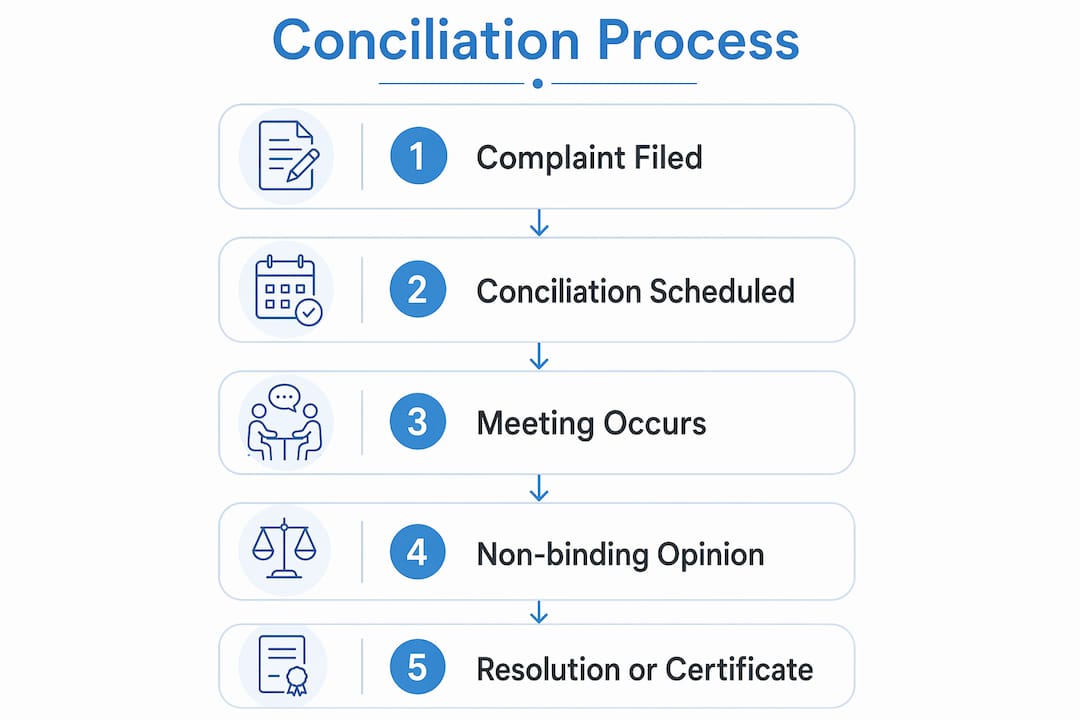
The conciliation process follows a clear sequence. Understanding each step helps you prepare and avoid costly mistakes.
Dispute arises. The insurer makes a decision you disagree with, such as rejecting your claim, stopping weekly benefits, or refusing to cover a medical expense. This triggers your right to apply for conciliation.
Lodge your application. You must apply within the deadline. Applicants typically have a 60-day window to lodge a formal conciliation application after a disputed insurer decision. Missing this deadline can forfeit your right to conciliation entirely.
Prepare your documents. Both parties must submit statements and supporting documents before the conference. Parties must provide statements or documents at least 5 days before conciliation. Failing to do so weakens your position and can cause procedural delays.
Attend the conciliation conference. Most conferences are scheduled for about 1.5 hours and may take place via web video or phone. This makes attendance accessible regardless of your location or mobility.
Reach agreement or receive a certificate. The conciliator works with both parties to reach a settlement. If no agreement is reached, the process moves to the next stage.
Pro Tip: Bring a legal representative to your conciliation conference. You are entitled to have a lawyer present, and having one significantly improves your ability to articulate your position clearly and respond to the insurer’s arguments in real time.
The conciliator may also provide non-binding opinions on probable outcomes to guide both parties toward resolution. This is a powerful tool. When a conciliator signals that one party’s position is unlikely to succeed, it often motivates that party to settle rather than risk a worse outcome later.
What disputes does work injury conciliation resolve?
Conciliation covers a defined range of workplace injury disputes. Knowing what falls within scope tells you whether conciliation is the right path for your situation.
Workers compensation disputes commonly involve:
- Claim acceptance. The insurer denies your claim entirely, arguing the injury is not work-related.
- Weekly benefit payments. The insurer reduces or stops your income replacement payments.
- Medical and treatment expenses. Disputes over whether specific treatments, surgeries, or specialist consultations are covered.
- Rehabilitation obligations. Disagreements about your return-to-work plan or the insurer’s duty to fund rehabilitation.
These four dispute categories cover the vast majority of contested claims. Each one directly affects your financial security and recovery, which is why resolving them quickly matters.
Conciliation does have limits. It cannot resolve disputes about permanent impairment assessments or common law damages claims. Those matters require separate legal processes. Understanding the workplace injury claims process as a whole helps you identify which pathway applies to your specific dispute.
Compared to arbitration or court proceedings, conciliation is faster, cheaper, and less adversarial. Arbitration involves a formal hearing where a binding decision is imposed. Court proceedings are slower still and carry significant legal costs. Conciliation sits at the front of the dispute resolution chain for good reason. It resolves the majority of disputes before they escalate.
What are the possible outcomes of work injury conciliation?
Conciliation produces one of two results: a settlement or a certificate that unlocks the next stage of dispute resolution.
When conciliation succeeds:
- Both parties sign a binding settlement agreement.
- The agreement is legally enforceable and resolves the disputed issues.
- Your claim progresses, and any agreed payments or benefits are reinstated or commenced.
- The process typically concludes within weeks, not months.
When conciliation does not resolve the dispute:
- The conciliator issues a Genuine Dispute Certificate.
- This certificate is a prerequisite to proceed to arbitration or court after failed conciliation.
- You can then apply to a workers compensation tribunal or court for a binding decision.
- Your rights to pursue the claim remain intact.
The Genuine Dispute Certificate is not a failure. It is a formal acknowledgement that a real dispute exists and that you have exhausted the conciliation step. It opens the door to stronger legal remedies. Knowing this removes the fear that an unresolved conciliation means your claim is dead.
Approximately 75% of filed complaints are resolved successfully at mediation or conciliation conferences, avoiding formal litigation. That figure means most injured workers who engage genuinely with the process reach a resolution without needing to go further. The minority who do not resolve at conciliation still have clear legal pathways available.
For workers dealing with serious injuries, understanding your dispute options after conciliation is critical before you enter the conference room.
How to prepare for a work injury conciliation conference
Preparation is the single biggest factor in conciliation outcomes. Workers who arrive organised, with clear evidence and a defined position, consistently perform better than those who attend unprepared.
Documents to gather before your conference:
- Your original workers compensation claim and any insurer correspondence.
- Medical reports, treatment records, and certificates of capacity from your treating doctors.
- Payslips and employment records to support weekly benefit calculations.
- Any written communication from your employer about the incident or your return to work.
Steps to take in the weeks before:
- Write a clear statement of your position. Describe what happened, what you are claiming, and what outcome you want.
- Contact your legal representative early. They can review the insurer’s position and identify weaknesses in their argument.
- Submit all documents at least 5 days before the conference. Failure to submit documents in time causes procedural delays and erodes trust, lowering your chances of settlement.
Common pitfalls to avoid:
- Missing the 60-day application deadline after the insurer’s decision.
- Attending without a representative when the dispute is complex.
- Failing to read the insurer’s pre-conference statement before the meeting.
- Treating the conciliator as an adversary rather than a neutral facilitator.
Pro Tip: Good faith participation is not just a courtesy. Non-compliance with procedural rules weakens your dispute position. Attend prepared, be honest about your situation, and engage constructively. Conciliators notice which party is genuinely trying to resolve the matter.
Understanding your workers compensation rights before the conference gives you the confidence to participate effectively and recognise when an offer is fair.
Key takeaways
Work injury conciliation resolves the majority of workplace compensation disputes through a free, structured process that keeps injured workers out of court and in control of their claim.
| Point | Details |
|---|---|
| Conciliation is free and informal | An independent conciliator facilitates agreement without imposing a binding decision on either party. |
| The 60-day deadline is critical | You must lodge your conciliation application within 60 days of the disputed insurer decision. |
| Document submission matters | Submit all statements and evidence at least 5 days before the conference to protect your position. |
| Most disputes resolve at conciliation | Around 75% of conciliation conferences result in settlement, avoiding arbitration or court. |
| A Genuine Dispute Certificate keeps options open | If conciliation fails, this certificate allows you to proceed to arbitration or a tribunal. |
Why conciliation is more powerful than most injured workers realise
Most injured workers I speak with arrive at conciliation thinking it is a formality before the “real” fight. That mindset costs them. Conciliation is where the majority of disputes actually end, and the workers who treat it seriously are the ones who walk away with fair outcomes.
The conciliator’s ability to offer a non-binding opinion on probable outcomes is genuinely underused. When a conciliator signals that the insurer’s position is weak, that opinion carries weight. Insurers know what comes next if they refuse to settle, and a conciliator’s frank assessment often shifts the negotiation quickly.
The barrier I see most often is not legal complexity. It is preparation. Workers who show up without organised documents, without a clear statement of what they want, and without legal support are at a real disadvantage. The insurer’s representative attends these conferences regularly. You may be attending yours for the first time. That experience gap is real, and it is closeable with the right preparation.
Early conciliation also reduces the psychological toll of a prolonged dispute. The longer a claim drags on without resolution, the harder recovery becomes. Getting to conciliation quickly, engaging in good faith, and arriving prepared gives you the best chance of a resolution that lets you focus on what actually matters: getting better.
— Daniel
How Carelawyers can help with your work injury dispute
Navigating a conciliation conference without legal support puts you at a disadvantage from the start. Carelawyers specialises in workplace injury claims and has a success rate of over 99% of claims won. The team works directly with you, without intermediaries, so you always know where your claim stands.

Whether your dispute involves rejected weekly benefits, denied medical expenses, or a claim the insurer refuses to accept, Carelawyers can represent you through conciliation and beyond. If conciliation does not resolve your matter, the team is equipped to pursue arbitration or court proceedings on your behalf. Contact Carelawyers to speak directly with a lawyer about your situation and your options.
FAQ
What is work injury conciliation in simple terms?
Work injury conciliation is a free, informal meeting where an independent conciliator helps an injured worker and their insurer resolve a compensation dispute without going to court.
How long does a conciliation conference take?
Most conciliation conferences are scheduled for approximately 1.5 hours and can be conducted via phone or video conference.
What happens if conciliation does not resolve my dispute?
The conciliator issues a Genuine Dispute Certificate, which allows you to apply for arbitration or commence court proceedings to have the dispute formally decided.
Do I need a lawyer for work injury conciliation?
You are not legally required to have a lawyer, but having one significantly improves your ability to present your case and respond to the insurer’s position effectively.
What is the deadline to apply for conciliation?
You typically have 60 days from the date of the disputed insurer decision to lodge a formal conciliation application. Missing this deadline can remove your right to conciliate.


