

Spinal cord injury compensation explained (2026)
Spinal cord injury compensation is financial redress awarded to individuals who suffer serious spinal injuries due to another party’s negligence, designed to cover lifelong care costs, lost earnings, and personal suffering. Known formally as personal injury damages, this type of claim divides into two broad categories: general damages for pain and suffering, and special damages for quantifiable financial losses. The stakes are significant. Settlements can range from $1 million to over $15 million depending on injury severity, age, and lifetime care needs. Understanding how the process works, what you can claim, and how settlements are calculated gives you the foundation to pursue fair compensation with confidence.
What types of damages are covered in spinal cord injury compensation claims?
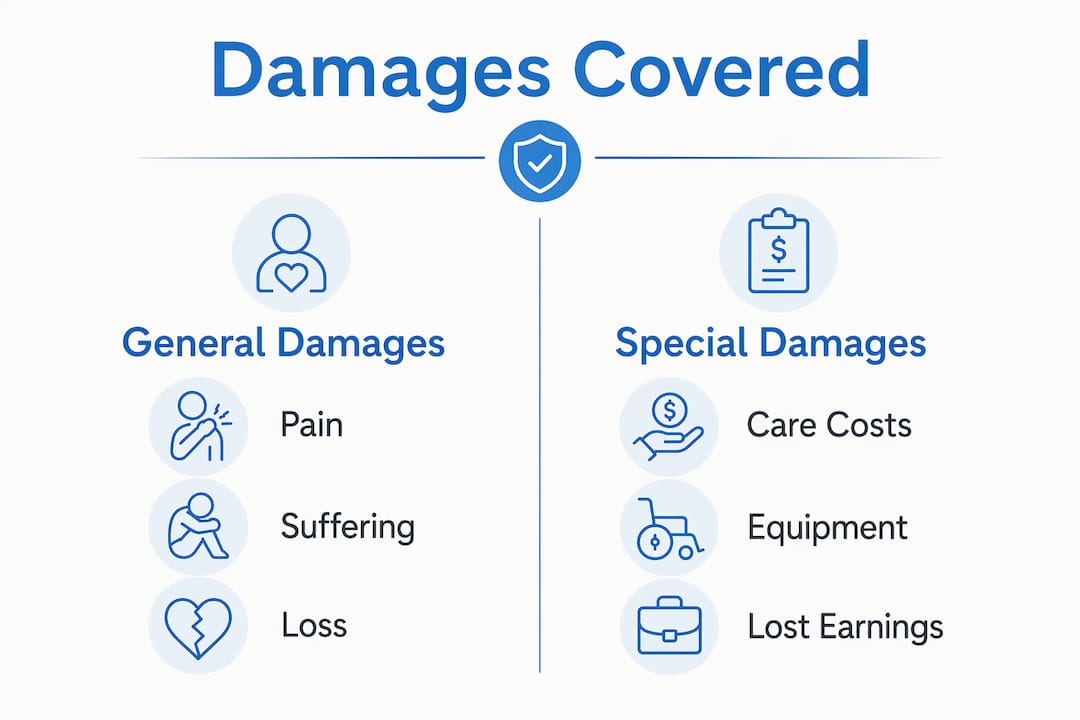
Special damages typically exceed general damages in spinal cord injury claims, a fact that surprises many claimants who assume most of the money is for pain and suffering. The reality is that the bulk of any serious spinal injury settlement reflects the projected cost of living with the injury for the rest of your life.
General damages cover non-economic losses. These include:
- Pain and suffering, both physical and psychological
- Loss of amenity (the inability to enjoy activities you previously valued)
- Loss of consortium or companionship in some jurisdictions
Special damages cover every quantifiable financial loss, past and future. These include:
- Medical treatment and hospitalisation costs
- Rehabilitation and physiotherapy
- Attendant care and personal support services
- Home and vehicle modifications
- Assistive equipment and technology
- Lost earnings and reduced earning capacity
The distinction matters because special damages are calculated with precision using expert reports, vocational assessments, and life care plans. General damages, by contrast, are assessed by reference to the nature and severity of the injury itself.
| Category | What it covers | Typical weight in settlement |
|---|---|---|
| General damages | Pain, suffering, loss of amenity | Smaller portion |
| Special damages | Care costs, lost income, equipment, home modifications | Largest portion |
Pro Tip: Keep every receipt, invoice, and out-of-pocket expense from the moment of your injury. Special damages require documentary proof, and gaps in your records can reduce what you recover.
How does the spinal injury claim process work in Australia?
The spinal injury claim process follows a structured sequence of steps, and knowing what comes next reduces the anxiety of an already difficult situation. Over 90% of spinal injury claims settle before trial, which means the process is more about building a compelling case than preparing for a courtroom battle.
Here is how the process typically unfolds:
- Seek immediate medical treatment. Your health comes first, and your medical records become the foundation of your claim. Every diagnosis, scan, and treatment note is evidence.
- Report the incident. Whether the injury occurred in a road accident, at work, or in a public place, report it formally to the relevant authority or insurer as soon as possible.
- Engage a specialist solicitor. A lawyer experienced in serious personal injury claims will assess your case, explain your rights, and advise on the strength of your claim. Most operate on a No Win No Fee basis, meaning no upfront legal costs.
- Gather evidence. This includes witness statements, photographs, incident reports, and any surveillance footage. Your solicitor will guide this process.
- Obtain independent medical assessments. Specialist medical experts assess the full extent of your injury, your prognosis, and your care needs. These reports underpin the valuation of your claim.
- Calculate lifetime losses. A Certified Life Care Planner and vocational expert project your future care costs and lost earning capacity. This is where the largest portion of your claim value is established.
- Enter negotiations. Your solicitor presents the claim to the at-fault party’s insurer. Most cases resolve at this stage through negotiation.
- Proceed to court if necessary. If a fair settlement cannot be reached, the matter proceeds to litigation. Courts in New South Wales and across Australia have broad powers to award damages that reflect the true lifetime impact of the injury.
Pro Tip: Start a personal impact diary from day one. Record how your injury affects your daily life, sleep, mood, and relationships. This contemporaneous record is critical for securing fair compensation and is far more persuasive than recollections made months later.
What are spinal cord injury claimants’ legal rights and time limits?
Your right to compensation arises when your spinal injury was caused by another party’s negligence. Proving negligence requires establishing four elements: duty of care, breach of that duty, causation (the breach caused your injury), and damages (you suffered a quantifiable loss). Each element must be supported by evidence.
In Australia, liable parties in spinal cord injury claims commonly include:
- Drivers who caused road accidents
- Employers who failed to provide a safe workplace
- Occupiers of premises where unsafe conditions caused a fall
- Medical practitioners where clinical negligence contributed to the injury
- Manufacturers of defective products
Time limits are strict and missing them can end your claim entirely. The standard limitation period in New South Wales is three years from the date of the accident or from the date you first became aware that negligence caused your injury. Exceptions apply for children, who generally have until three years after turning 18, and for adults who lacked legal capacity at the time of the injury. Acting promptly protects your rights and preserves evidence before it disappears.
Legal success in spinal cord claims depends on the collaborative work of legal and medical professionals documenting not just your physical injury but also the psychological effects and your loss of independence. Courts and insurers respond to thorough, expert-backed evidence. The earlier you engage a specialist, the stronger your position.
How is the value of spinal cord injury compensation calculated?
The value of a spinal cord injury claim is built on a Certified Life Care Plan, a detailed document prepared by a qualified life care planner that projects every cost you will incur over your lifetime as a result of the injury. These plans run to hundreds of pages and form the foundation of multi-million-dollar settlements.

A life care plan itemises costs across several categories. Care hours are often the single largest item, with many tetraplegic claimants requiring between 8 and 24 hours of attendant care daily. Equipment replacement schedules account for wheelchairs, communication devices, and medical technology that must be replaced on regular cycles. Home and vehicle modifications are costed by occupational therapists and builders. Therapies including physiotherapy, occupational therapy, and psychology are projected across your expected lifespan.
| Cost component | Examples | Typical annual range |
|---|---|---|
| Attendant care | Personal care, overnight support | High six figures annually |
| Equipment | Wheelchairs, communication aids | Varies by replacement cycle |
| Home modifications | Ramps, bathroom adaptations, lifts | One-off and ongoing costs |
| Therapies | Physio, OT, psychology | Tens of thousands annually |
| Lost earning capacity | Vocational assessment-based projection | Depends on age and career |
The insurer will commission their own life care planner to dispute your figures. This battle of the life care planners is the central contest in most high-value spinal injury claims. The quality and detail of your expert evidence directly determines the outcome.
Interim payments provide critical financial support during the claim process, covering urgent rehabilitation costs and home modifications before the final settlement is reached. You do not have to wait years for funds to access the care you need now.
Pro Tip: Work with your legal team to engage a certified life care planner early. The earlier the plan is prepared, the more time your experts have to refine and defend it against insurer challenges.
What practical steps improve your compensation outcome?
The difference between a fair settlement and an inadequate one often comes down to the quality of your evidence and the expertise of your legal team. Detailed personal records enhance claim leverage significantly, particularly for non-economic losses that cannot be proven by receipts alone.
Practical steps that strengthen your claim include:
- Keep a personal impact diary. Record daily limitations, pain levels, emotional impacts, and activities you can no longer perform. Courts and insurers take these contemporaneous accounts seriously.
- Document every expense. Medical costs, travel to appointments, home help, and equipment purchases should all be recorded with receipts.
- Engage a specialist solicitor early. General practitioners in personal injury law rarely have the expert networks needed for complex spinal cord claims. Specialists bring established relationships with life care planners, medical experts, and vocational assessors.
- Understand your fee arrangement. No Win No Fee agreements mean you pay nothing unless your claim succeeds. This removes the financial barrier to accessing expert legal representation.
- Attend all medical appointments and follow treatment plans. Gaps in treatment or non-compliance can be used by insurers to argue your condition is less severe than claimed.
Pro Tip: Do not accept an early settlement offer without obtaining independent legal advice. Insurers sometimes make early offers that appear generous but fall well short of your true lifetime losses. Once you accept, you cannot return for more.
You can also read about the car accident claim process for a broader understanding of how personal injury claims are structured in New South Wales.
Key takeaways
Spinal cord injury compensation is determined primarily by lifetime care costs, not pain and suffering, making expert life care planning the single most important factor in achieving a fair settlement.
| Point | Details |
|---|---|
| Special damages dominate | Lifetime care, equipment, and lost earnings form the largest share of any spinal injury settlement. |
| Time limits are strict | In New South Wales, you generally have three years from the injury date to commence a claim. |
| Life care plans are central | A Certified Life Care Plan projects all future costs and forms the foundation of high-value settlements. |
| Interim payments are available | You can access funds for urgent care and modifications before the final settlement is reached. |
| Evidence quality determines outcome | Personal impact diaries and detailed expense records directly strengthen your claim value. |
What I have learned from watching these claims unfold
The most common misconception I encounter is that spinal cord injury compensation is primarily about being paid for pain. Clients arrive expecting the emotional weight of their suffering to drive the settlement figure. The truth is harder and more practical. The money that genuinely changes lives comes from the lifetime care calculation, and that calculation is only as good as the experts behind it.
I have seen claims where the injured person had a strong case on liability but received far less than they deserved because the life care plan was underprepared or the medical evidence was thin on psychological impact. Insurers are sophisticated. They will find every gap in your evidence and use it to reduce their exposure.
The other thing I would tell anyone starting this process is to treat the personal impact diary as seriously as any medical appointment. Judges and mediators respond to specific, dated accounts of how your life has changed. “I used to coach my daughter’s football team on Saturdays. I have not been able to attend a single game since the accident.” That kind of detail, recorded at the time, is worth more than a generic statement about ongoing difficulties.
Getting the right legal team around you early is not a luxury. It is the single decision that most determines your outcome.
— Daniel
How Carelawyers can help with your spinal injury claim
Carelawyers is a Sydney-based personal injury firm with a success rate of over 99% of claims won and more than a decade of experience helping seriously injured Australians recover the compensation they deserve.

If you or a family member has suffered a spinal cord injury due to someone else’s negligence, Carelawyers offers a free initial consultation to assess your claim and explain your options clearly. Their No Win No Fee lawyers mean you face no upfront legal costs and no financial risk in pursuing your rights. From gathering evidence and engaging life care planners to negotiating with insurers and representing you in court, Carelawyers handles every stage of the process. Speak directly with an experienced personal injury lawyer today and take the first step toward financial recovery.
FAQ
What does spinal cord injury compensation cover?
Spinal cord injury compensation covers both general damages (pain, suffering, and loss of amenity) and special damages (medical costs, rehabilitation, attendant care, home modifications, lost earnings, and equipment). Special damages typically form the largest portion of any serious spinal injury settlement.
How long do I have to make a spinal injury claim in Australia?
The standard limitation period in New South Wales is three years from the date of the accident or from when you first became aware that negligence caused your injury. Exceptions apply for children and adults who lacked capacity at the time of the injury.
What is a life care plan and why does it matter?
A life care plan is a detailed document prepared by a Certified Life Care Planner that projects all future costs arising from your injury, including care hours, equipment, therapies, and home modifications. It forms the foundation of multi-million-dollar settlements and is the primary document insurers will challenge.
Can I claim if I cannot afford a lawyer?
Most specialist spinal injury solicitors operate on a No Win No Fee basis, meaning you pay no upfront legal fees and only pay if your claim succeeds. This arrangement removes the financial barrier to accessing expert legal representation.
What if the insurer makes an early settlement offer?
Do not accept any offer without independent legal advice. Early offers from insurers often fail to account for your full lifetime losses, and once you accept a settlement you cannot return for additional compensation later.


