

Severe burn injury compensation steps: your guide for Australians
If you or someone close to you has suffered a severe burn, the single most important thing you can do right now is get to a hospital with a specialist burn unit. Not a GP. Not a walk-in clinic. A burn unit, where a team can assess total body surface area (TBSA), depth, and the need for grafting. That decision in the first hours protects both your health and your legal rights.
Once you are medically stable, three actions preserve your compensation options:
- Get a specialist burn unit referral and keep every document from the ambulance report through to discharge summaries.
- Photograph the injury site, the scene, and any damaged equipment before anything is cleaned up or removed.
- Notify your employer (or police, if a vehicle accident) in writing and keep your own copy of that notification.
Key Australian bodies you need to know about immediately: Safe Work Australia sets the national framework for workplace injury reporting; your state WorkCover scheme (icare in NSW, WorkSafe Victoria, WorkCover Queensland, ReturnToWorkSA, WorkCover WA, or WorkSafe ACT) handles workers compensation claims; Comcare covers Commonwealth government employees; and Carelawyers is a Sydney-based personal injury firm that handles severe burn claims under no win, no fee arrangements.
Pro Tip: Start a scar photo timeline from day one. Photograph the burn at the same angles, with a ruler for scale, every week for the first three months. Scarring evolves significantly, and early photos are often the most powerful evidence in a permanent impairment assessment months later.
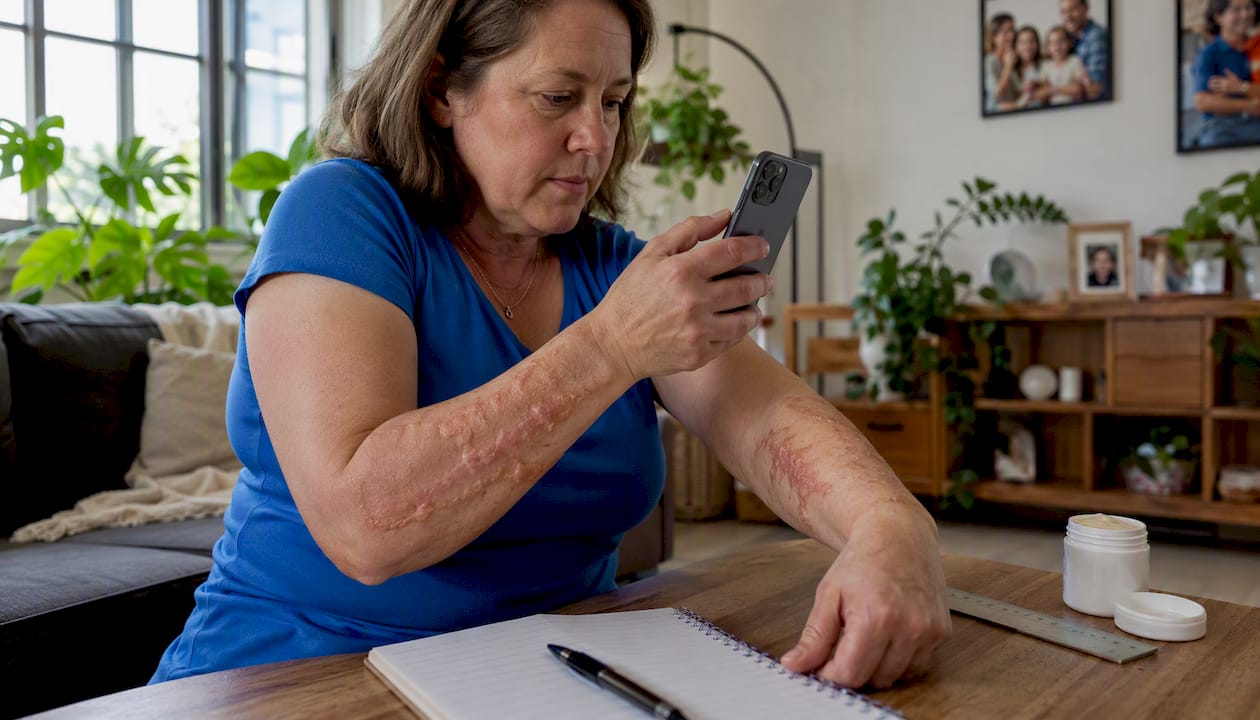
Table of Contents
- What are the severe burn injury compensation steps you need to follow?
- What medical records do you need to secure after a severe burn?
- How do you report the incident and lodge the right claim in Australia?
- What evidence do you need to collect and how do you preserve it?
- What compensation can you claim for a severe burn in Australia?
- Why permanent impairment assessments often get it wrong for burn survivors
- What time limits apply to burn injury claims in Australia?
- When should you get a lawyer for a severe burn claim?
- How does settlement and dispute resolution work for burn claims?
- Printable checklist: what to do in the first 7 days and first 3 months
- Key takeaways
- What most burn survivors get wrong about their claim
- How Carelawyers can help with your severe burn claim
- Useful sources and official contacts
What are the severe burn injury compensation steps you need to follow?
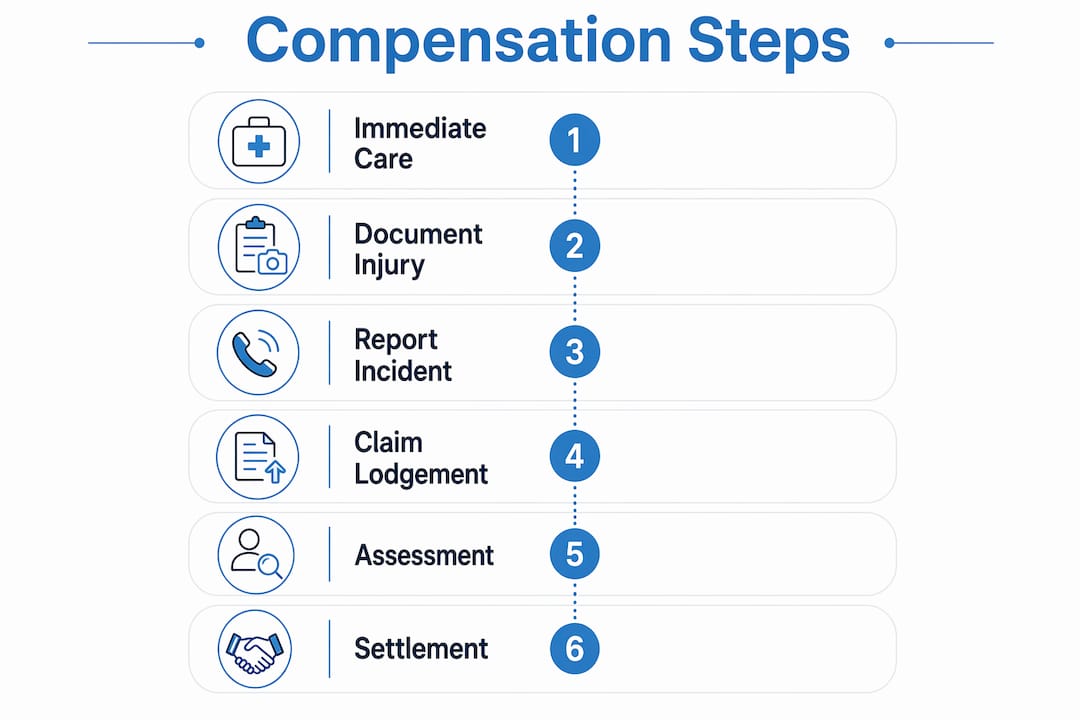
The sequence below is time-ordered. Do not skip steps or reorder them — each one protects the next.
First 24 hours
- Call 000 and get ambulance transport to the nearest major hospital or burn centre. Request a specialist burn unit referral at triage.
- Ask a family member or support person to photograph the injury scene, any equipment involved, and your clothing before anything is moved.
- If the burn happened at work, tell your supervisor or manager in person and follow up in writing (text or email) the same day.
- If it happened in a vehicle accident, ask police to attend and obtain the event number.
- Collect the names and phone numbers of any witnesses before leaving the scene.
First week
- Request copies of your ambulance report, emergency department notes, and admission records from the hospital.
- Lodge a formal incident report with your employer (or request confirmation that one has been lodged) and keep your copy.
- Contact your state WorkCover scheme, Comcare (if a Commonwealth employee), or a CTP insurer (if a motor accident) to notify them of the injury. Early notification preserves provisional medical payment rights.
- Contact a personal injury lawyer — ideally one with experience in severe burn claims — before speaking to any insurer beyond the initial notification.
Ongoing
- Attend every specialist appointment and keep all clinic notes, referral letters, and pharmacy records.
- Continue your scar photo timeline and maintain a daily pain and function journal.
- Work with your lawyer to instruct a life care planner and forensic economist when your condition stabilises.
Which claim path applies to you?
- Workplace burn: workers compensation through your state WorkCover scheme or Comcare (Commonwealth employees). See the WorkCover claim process for step-by-step lodgement guidance.
- Motor vehicle accident: CTP (compulsory third party) claim against the at-fault driver’s insurer.
- Public place or product defect: public liability or product liability claim.
- Criminal act: state-based criminal injuries compensation scheme.
Provisional payments: NSW workers compensation guidelines recognise burns as a catastrophic injury in specific circumstances, allowing insurers to make provisional medical expense payments before liability is finalised.
What medical records do you need to secure after a severe burn?
Major burns require specialised burn centre care, staged reconstructive surgery, and long-term rehabilitation and psychological support. That treatment pathway generates the documentary evidence that drives your compensation claim.
Immediate treatment records
- Ambulance patient care record (request from the ambulance service directly if the hospital does not provide it automatically).
- Emergency department triage notes, admission notes, and vital signs records.
- Burn unit assessment: TBSA estimate (clinicians use the rule of nines, which assigns 9% to each arm, 9% to the chest, and so on), burn depth classification, and initial wound management notes.
- Specialist burn surgeon’s assessment and treatment plan.
Surgical and inpatient records
- Operation notes for every procedure: graft details (TBSA grafted, donor sites, graft type), anaesthetic records, and post-operative notes.
- Pathology and microbiology results (infection management is a major cost driver).
- Discharge summary with follow-up instructions.
Rehabilitation and mental health records
- Physiotherapy and occupational therapy session notes, functional assessments, and home modification recommendations.
- Psychologist or psychiatrist notes (depression, anxiety, and PTSD are common after severe burns).
- Medication records, including scar management products and pain management.
To request records, contact the hospital’s medical records department in writing. Most public hospitals in NSW and other states have a formal release process; allow two to four weeks and follow up if records are delayed. Your lawyer can issue a formal request on your behalf, which often accelerates the process.
Clinical guidance describes the typical phases of severe burn care as: acute phase (first 30–90 days), reconstructive phase (six months to five or more years), and long-term rehabilitation and scar management. Documenting every phase matters because future care costs across that entire timeline are recoverable.
Pro Tip: Ask your treating burn surgeon to include a specific note about functional limitations in every clinic letter, not just wound status. A letter that says “wound healing well” but says nothing about grip strength, range of motion, or pain on movement is far less useful in an impairment assessment than one that records both.
How do you report the incident and lodge the right claim in Australia?
Employer reporting and your own record
Your employer is legally required under state work health and safety laws to record and report serious workplace injuries. Do not rely solely on their record. Send a written notification (email is fine) the same day, stating the date, time, location, what happened, and the nature of your injury. Keep a screenshot or printed copy.

If no police report exists for a vehicle accident, that does not end your claim. Practical strategies for claims without a police report exist, but a report is always preferable where one can be obtained.
Workers compensation (WorkCover/state schemes)
- Obtain a workers compensation medical certificate from your treating doctor (a “work injury certificate” in NSW).
- Lodge the claim form with your employer’s workers compensation insurer. In NSW, the insurer must accept or dispute the claim within a defined period.
- Request confirmation of provisional medical expense payments in writing.
- The workplace injury claim process page on Carelawyers explains each lodgement step in detail.
Comcare (Commonwealth employees)
Lodge a claim directly with Comcare using their online portal or paper form. Comcare covers Australian Public Service employees and certain licensed corporations. The process differs from state schemes, so legal advice specific to Comcare is worth getting early.
CTP claims (motor accidents)
In NSW, notify the CTP insurer of the at-fault vehicle within 28 days of the accident. Other states have their own CTP schemes and notification windows. A motorcycle accident claim or passenger claim follows the same CTP path.
A word on early insurer contact
Notify the insurer promptly, but keep your initial statement factual and brief. Do not speculate about fault, minimise your symptoms, or agree to a recorded statement without legal advice. Early admissions can limit your claim significantly.
What evidence do you need to collect and how do you preserve it?
Strong evidence is what separates a fully compensated claim from a disputed one. Here is what to gather and how to protect each item.
Photographs
- Photograph the injury at the scene before any treatment, if safe to do so.
- Continue weekly photographs of the burn and scars, using the same angles, natural lighting, and a ruler for scale.
- Photograph the scene itself: the equipment, the surface, the vehicle, or the product involved.
- Store photos in a cloud backup (Google Photos, iCloud) with automatic date and time stamping enabled.
Witness details and statements
- Record full name, phone number, and email address for every witness at the scene.
- Ask each witness to write a brief account of what they saw, sign it, and date it. Even a text message or email summary from a witness is useful.
- Do this within 48 hours while memories are fresh.
Employment and site evidence
- Request copies of your incident report, any safety audit records, PPE issue logs, and training records from your employer.
- If PPE was damaged or defective, preserve the physical items in a sealed bag and photograph them before handing them to anyone.
- Ask your union delegate or health and safety representative to assist if your employer is uncooperative.
- See workplace injury evidence examples for a practical breakdown of what a strong evidence package looks like.
Medical chain-of-care evidence
- List every treating provider from the ambulance crew through to your current specialists.
- Sign medical record release forms early so your lawyer can collect records without delays.
- Keep a personal folder (physical or digital) with every receipt, referral letter, and prescription.
Physical evidence
- Preserve damaged clothing, soiled PPE, or any defective product in a sealed bag. Label it with the date and a brief description.
- Do not wash or repair anything until your lawyer has advised it is safe to do so.
- Digital backups of all documents: scan or photograph every paper record and store it in at least two locations.
What compensation can you claim for a severe burn in Australia?
Compensation for burn injuries covers economic losses, medical costs, and non-economic damages including pain, suffering, and disfigurement. The heads of damage available depend on your claim type (workers compensation, common law, CTP, or public liability), but the main categories are:
- Past medical expenses: hospital, surgery, grafting, rehabilitation, medications, and aids.
- Future medical expenses: ongoing scar management, reconstructive surgery, physiotherapy, and psychological treatment.
- Past economic loss: wages lost from the date of injury to settlement.
- Future economic loss: reduced earning capacity over your working life.
- Domestic and care services: assistance with household tasks and personal care you can no longer perform.
- Pain and suffering / non-economic loss: assessed under state-specific thresholds using whole person impairment (WPI) ratings.
- Disfigurement and scarring: particularly influential when burns affect the face, hands, or other visible areas.
Whole person impairment (WPI) and permanent impairment
WPI is assessed by an accredited medical assessor using the AMA Guides (5th edition) or jurisdiction-specific guidelines. The percentage assigned directly affects the non-economic loss component of your claim. Scarring on the hands or face, functional loss of grip, and restricted range of motion all contribute to a higher WPI rating. The NSW Judicial Commission benchbook on damages outlines how non-economic loss is assessed and how structured settlements are approved.
Settlement ranges by burn severity
The figures below are indicative ranges drawn from reported case data and should not be treated as guarantees. Your actual outcome depends on TBSA, depth, location, age, earning capacity, and the specific claim pathway.
| Burn severity | Typical indicative range (AUD) | Key cost drivers |
|---|---|---|
| Second-degree, small TBSA | $50,000–$200,000 | Scarring, time off work, pain |
| Grafting to hands or face | $200,000–$700,000 | Functional loss, disfigurement, ongoing treatment |
| Third-degree, under 20% TBSA | $500,000–$2,000,000 | Grafting, rehab, earning capacity |
| Third-degree, over 20% TBSA | $1,500,000–$5,000,000 | Life care plan, lifetime care needs |
| Catastrophic / very large TBSA | $3,000,000–$20,000,000+ | Lifetime care, full economic loss |
Source: Severe Burn Injury Claims: Settlements & Lifetime Costs. Ranges reflect reported US and international case data; outcomes in Australia vary by jurisdiction and circumstances.
Life care plans
The life care plan is the single most important evidentiary document in large burn claims. A rehabilitation specialist and forensic economist work together to convert your lifetime medical and care needs into a provable dollar figure. Insurers must address it directly in any negotiation. For catastrophic burns, the life care plan often determines whether a settlement reaches seven figures. See also how spinal cord injury compensation uses the same life care planning approach for catastrophic claims.
Why permanent impairment assessments often get it wrong for burn survivors
Whole person impairment assessments are where many severe burn claims lose value quietly. The assessor examines the claimant, applies the relevant guidelines, and issues a Medical Assessment Certificate (MAC). The problem is that assessors sometimes record that scarring does not affect daily life without actually analysing which specific activities of daily living (ADLs) are impaired.
In Hosie v Azzurri Services Pty Ltd [2025] NSWPICMP 216, a tribunal appeal found that a MAC contained demonstrable errors precisely because the assessor had not properly analysed how the claimant’s scarring affected ADLs and ongoing treatment needs. The MAC was revoked and a new assessment ordered.
Pro Tip: Before your impairment assessment, prepare a written list of every daily task affected by your scars or functional loss: dressing, gripping, lifting, sleeping, bathing, driving, and any work-specific tasks. Hand this list to your treating specialist and ask them to address each item in their report. An assessor who ignores a detailed specialist report is far more vulnerable to appeal.
A contested MAC can be challenged through the Personal Injury Commission in NSW or equivalent bodies in other states. The serious injury claim dispute options page explains the appeals pathways available if your assessment is disputed or your claim is denied.
What time limits apply to burn injury claims in Australia?
Time limits in personal injury law are strict. Miss them and you may lose your right to claim entirely, regardless of how serious your injuries are.
Common lodgement and limitation windows
- Workers compensation (NSW): notify your employer as soon as practicable; lodge the claim form within six months of the injury (late lodgement may be accepted in limited circumstances, but do not rely on this).
- Workers compensation (other states): Victoria, Queensland, South Australia, and WA each have their own windows, generally ranging from one to three years for common law claims. Check your state scheme directly.
- Common law personal injury (NSW): three years from the date of injury under the Limitation Act 1969 (NSW), subject to the discovery rule where the injury was not immediately apparent.
- CTP motor accident (NSW): notify the insurer within 28 days; lodge a claim within three months of the accident (extensions apply in some circumstances).
- Comcare: notify as soon as practicable; claim within six years, but early lodgement is strongly recommended.
The difference between lodgement and limitation deadlines
Lodging a claim with an insurer and commencing court proceedings are two separate actions with separate deadlines. Notifying an insurer early preserves provisional payment rights and keeps your options open. It does not start the clock on a court limitation period, but it does create a formal record that protects you if the insurer later disputes the timing of your claim.
Legal deadline callout: If you are approaching the three-year mark from your injury date and have not yet received legal advice, contact a lawyer immediately. The discovery rule can extend time in some circumstances, but it is not guaranteed and requires legal argument. Do not assume it applies to your situation without advice.
Getting legal advice early also stops you from inadvertently making admissions or signing documents that limit your claim. The serious injury claim timeline guide explains how to manage milestones across the full claim period.
When should you get a lawyer for a severe burn claim?
The honest answer: immediately. Not after you have tried to handle it yourself. Not after the insurer has made an offer. From the first week.
What a lawyer does in a severe burn claim
- Gathers and preserves evidence before it disappears (CCTV footage, maintenance logs, PPE records).
- Instructs independent medical experts, including burn specialists, occupational therapists, and psychologists.
- Commissions a life care plan and forensic economic report to quantify future losses.
- Manages all communications with the insurer to prevent harmful admissions.
- Negotiates the settlement and, if needed, runs the matter to court or tribunal.
Fee arrangements
Most personal injury lawyers in Australia handle severe burn claims on a no win, no fee (contingency) basis. You pay nothing upfront; the legal fee is deducted from your settlement if you win. Disbursements (medical reports, expert fees, court filing) may be funded by the firm or charged separately — ask at your first consultation. Some firms also offer fixed-fee arrangements for defined stages of a claim.
Questions to ask at your first consultation:
- What is your experience with severe burn claims specifically?
- How do you fund disbursements?
- What is the likely timeline for my type of claim?
- Who will I speak to when I have questions?
Pro Tip: At your first lawyer meeting, bring your incident report, your hospital discharge summary, and your scar photo timeline. A lawyer who can see the injury progression from day one can assess your claim far more accurately than one working from a verbal description alone.
Carelawyers handles severe burn claims across workers compensation, CTP, and common law pathways. Clients speak directly to their lawyer, not a case manager, and the firm operates on a no win, no fee basis. The benefits of no win, no fee page explains how the fee model works in practice.
How does settlement and dispute resolution work for burn claims?
The typical sequence
Most severe burn claims do not go to court. The usual path is:
- Demand / letter of claim: your lawyer sends a formal demand to the insurer or defendant, setting out the injuries, losses, and the compensation sought.
- Insurer response: the insurer investigates, obtains their own medical reports, and responds with an offer or a dispute.
- Negotiation: offers and counter-offers, usually over several months. The life care plan and economic loss report are the primary negotiating tools.
- Mediation: many states require formal mediation before a matter can proceed to court. A mediator facilitates negotiation but cannot impose a settlement.
- Court: if mediation fails, the matter proceeds to hearing. Most cases settle before a judgment is handed down.
Typical timeframes range from 12 months for straightforward claims to three or more years for catastrophic burns with disputed liability or impairment. The serious injury claim timeline guide sets realistic expectations for each stage.
Structured settlements
For very large claims, a structured settlement converts a lump sum into periodic payments over the claimant’s lifetime. This is particularly relevant for catastrophic burns where lifetime care needs are ongoing. The NSW Judicial Commission benchbook outlines the statutory approval process for structured settlements and how non-economic loss is calculated within them.
What keeps a claim from settling
- Disputes about liability (contributory negligence, employer denying fault).
- Disputes about impairment (insurer challenging the WPI rating — see Section 7).
- Coverage limits (CTP or liability policy limits that cap the available amount).
- Incomplete life care plan or economic loss evidence.
| Cost category | Acute phase | Long-term / lifetime |
|---|---|---|
| Hospitalisation and surgery | High (grafting, ICU, infection management) | Moderate (reconstructive procedures) |
| Rehabilitation | High (physio, OT, psychology) | Ongoing (scar management, mental health) |
| Economic loss | Immediate (total incapacity) | Significant (reduced capacity, retraining) |
| Care and domestic services | High (personal care, household) | Ongoing if permanent disability |
| Life care plan value | Establishes baseline | Drives settlement multiplier |
Printable checklist: what to do in the first 7 days and first 3 months
First 7 days
- Get ambulance transport to a hospital with a specialist burn unit.
- Request a specialist burn surgeon referral at triage.
- Ask someone to photograph the scene, equipment, and your clothing before anything is moved.
- Notify your employer in writing (text or email) the same day.
- Collect witness names and contact details.
- Request ambulance report and emergency department notes.
- Contact your state WorkCover scheme, Comcare, or CTP insurer to notify them of the injury.
- Contact a personal injury lawyer before making any statement to an insurer.
First 3 months
- Attend every specialist appointment and collect all clinic notes and referral letters.
- Continue weekly scar photographs with a ruler for scale.
- Maintain a daily pain and function journal.
- Request all employment records: incident report, PPE logs, training records, safety audits.
- Preserve any damaged clothing or PPE in a sealed, labelled bag.
- Ask your treating specialist to include functional limitations in every clinic letter.
- Discuss the timing of a permanent impairment assessment with your lawyer.
- If losses are significant, instruct a life care planner and forensic economist.
- Lodge any formal claim forms required by your state scheme or insurer.
- Review any insurer correspondence with your lawyer before responding.
Saving this checklist: screenshot this page or use your browser’s print function (File > Print > Save as PDF) to keep a copy. Share it with a family member or carer who is helping you manage the claim.
Key takeaways
A severe burn compensation claim in Australia depends on three things done early: specialist medical care with thorough documentation, prompt incident reporting to the right authority, and legal advice before any insurer engagement.
| Point | Details |
|---|---|
| Act in the first 24 hours | Get to a burn unit, photograph the scene, and notify your employer or police in writing the same day. |
| Document every treatment phase | Collect ambulance, ED, surgical, rehab, and mental health records — the full treatment timeline drives claim value. |
| Challenge narrow WPI assessments | An impairment certificate that ignores ADL impacts is contestable, as confirmed in Hosie v Azzurri Services [2025]. |
| Know your time limits | Workers compensation lodgement windows and common law limitation periods vary by state; missing them ends your claim. |
| Carelawyers for severe burn claims | Carelawyers handles workers compensation, CTP, and common law burn claims in NSW on a no win, no fee basis with direct lawyer access. |
What most burn survivors get wrong about their claim
The conventional wisdom says: lodge your claim, follow your doctor’s advice, and wait for the insurer to make an offer. That approach works fine for a sprained wrist. For a severe burn, it is genuinely costly.
The gap between what a claim is worth and what an insurer initially offers is widest in severe burn cases precisely because the long-term costs are so hard to quantify without expert input. An insurer’s early offer is almost never built around a life care plan. It is built around what the claimant has documented so far, which in the first months is usually incomplete.
The other thing people underestimate is the impairment assessment. A WPI rating that misses the functional impact of scarring on daily tasks is not just a number — it is a cap on your non-economic loss entitlement. Challenging it after the fact is possible, as Hosie v Azzurri Services shows, but it takes time and costs money. Getting it right the first time, by preparing your treating specialists and your own written ADL account beforehand, is far more efficient.
Early legal involvement is not about being adversarial with your employer or insurer. It is about making sure the evidence is complete before anyone makes a decision about your claim’s value. The serious injury claim documentation guide is a practical starting point for understanding what a complete evidence package looks like.
How Carelawyers can help with your severe burn claim
Recovering from a severe burn is hard enough without having to navigate a compensation system that was not designed with injured people in mind.

Carelawyers works with severe burn survivors across workers compensation, CTP motor accident, and common law claims in NSW. Clients speak directly to their lawyer from the first call, not a receptionist or case manager. The firm operates on a no win, no fee basis, meaning you pay nothing unless your claim succeeds. For urgent situations, the team can assist with interim financial support requests and provisional medical payment applications while the main claim is processed.
To start a conversation, have your incident date, a brief description of how the burn occurred, and your treating hospital’s name ready. Carelawyers will triage your situation, identify the right claim pathway, and advise on any urgent deadlines. For workplace burns, the workplace injury claim process page explains exactly what to expect at each stage. For a full picture of what you can recover, the damages guide covers every head of loss in plain language.
All enquiries are confidential. Contact Carelawyers at carelawyers.com.au to speak with a lawyer today.
This article is general information only and does not constitute legal advice. Time limits and entitlements vary by state and circumstance. Confirm the current rules with the relevant scheme authority or a qualified personal injury lawyer for your specific situation.
Useful sources and official contacts
Australian government and scheme contacts
- Safe Work Australia: safeworkaustralia.gov.au — national workplace safety framework, incident reporting guidance.
- icare NSW (workers compensation): icare.nsw.gov.au
- WorkSafe Victoria: worksafe.vic.gov.au
- WorkCover Queensland: worksafe.qld.gov.au
- ReturnToWorkSA: rtwsa.com
- WorkCover WA: workcover.wa.gov.au
- Comcare: comcare.gov.au — Commonwealth employees and licensed corporations.
Burn unit and clinical guidance
- Australian and New Zealand Burn Association (ANZBA): anzba.org.au — burn centre directory and referral criteria.
- Mayo Clinic burns treatment overview: mayoclinic.org — clinical phases of burn care.


