

Serious injury claim documentation: your 2026 guide
Insurance claim serious injury documentation is the organised collection of all relevant medical, financial, personal, and witness evidence needed to prove your injury, its causes, and its full impact on your life. Without this evidence, insurers have little reason to pay fair compensation. Australian personal injury law requires claimants to demonstrate both liability and damages, and the quality of your documentation directly shapes the outcome. Carelawyers, a Sydney-based personal injury firm with a success rate of over 99% of claims won, consistently finds that well-documented claims settle faster and for more money.
What documents do you need for a serious injury insurance claim?
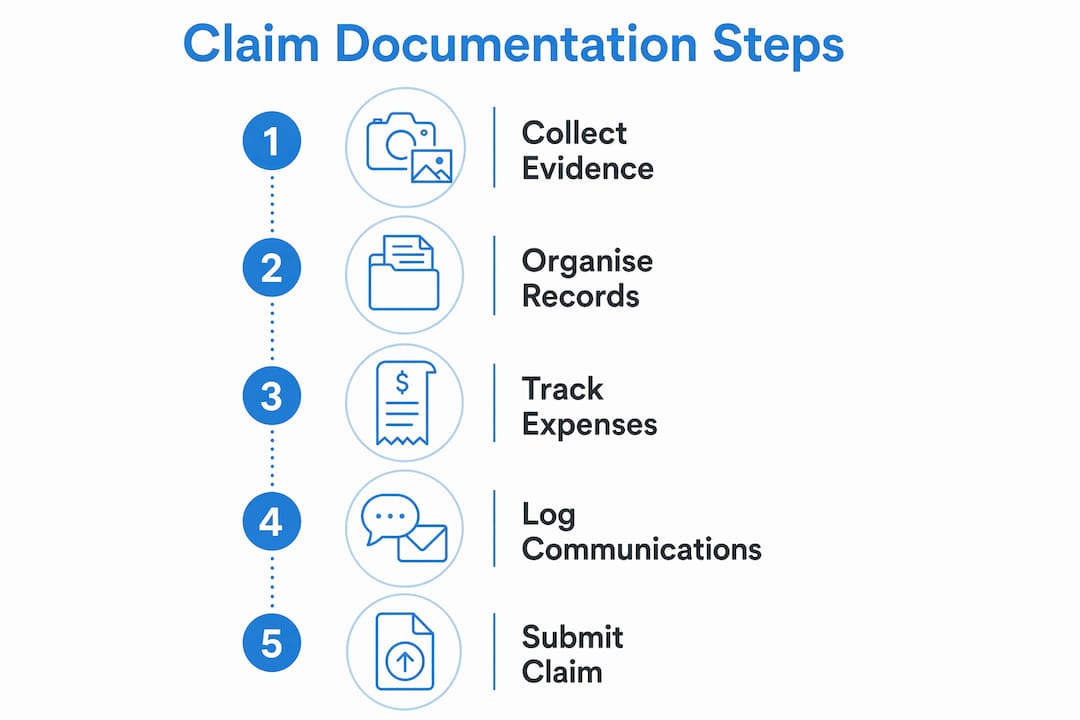
The serious injury claim process begins with understanding exactly what evidence you must collect. Documentation falls into five clear categories, and gaps in any one of them can reduce your settlement.
Medical records form the foundation of every claim. Collect your initial emergency department reports, all specialist consultation notes, imaging results such as X-rays and MRI scans, physiotherapy and rehabilitation records, and any neuropsychological testing reports. Brain injury claims in particular require neuropsychological testing to document cognitive and functional deficits, because standard imaging may appear normal even when real damage exists. That gap between what a scan shows and what a person experiences is exactly where objective testing protects your claim.
Financial records cover every dollar your injury has cost you. This includes:
- Medical bills, hospital invoices, and pharmacy receipts
- Mileage logs for every medical appointment
- Home modification costs and equipment purchases
- Payslips and employer letters confirming lost work hours
- Receipts for domestic help, childcare, or other services you now need
Claimants must track all related expenses to maximise economic damage claims. A single missed receipt for a prescription or a taxi to a specialist appointment adds up across months of recovery.
Personal documentation means your own written record of how the injury affects daily life. This is covered in detail below, but the short version is: start a journal on day one and write in it every day.
Accident scene evidence includes photographs, videos, and environmental condition notes taken as close to the incident as possible. For workplace injuries, this also means preserving any incident reports, safety records, and equipment logs. You can find practical workplace injury evidence examples that apply directly to this category.

Communication records with your insurer matter more than most people realise. Keep a log of every phone call, including the date, time, name of the person you spoke with, and a summary of what was said. Save every email and letter.
Pro Tip: Create a dedicated email folder for all insurer correspondence from day one. Forward any phone call summaries to yourself immediately after the call so you have a timestamped record.
How do you organise your documentation during the claim process?
Disorganised records are nearly as damaging as missing records. Insurance adjusters are trained to find inconsistencies and treatment gaps. A living claim worksheet updated monthly flags those gaps early so you can address them before settlement negotiations begin.
Set up your documentation system using these steps:
- Create a master folder with subfolders labelled: Medical, Financial, Personal Journal, Accident Evidence, and Insurer Correspondence.
- Name every file with a date prefix in the format YYYYMMDD so files sort chronologically automatically.
- Maintain a claim worksheet as a single spreadsheet or document listing every medical appointment, expense, and piece of evidence, with a column for “gaps to fill.”
- Review the worksheet monthly and identify any missing receipts, unrequested specialist reports, or witness statements you have not yet obtained.
- Back up everything to a second location, whether a cloud service or an external drive, so no single device failure destroys your case.
Consistency matters as much as completeness. Record dates, full names of treating practitioners, and exact amounts on every entry. Vague entries like “saw doctor, cost about $200” are far weaker than “appointment with Dr Sarah Nguyen, Royal North Shore Hospital, 14 march 2026, invoice $215.”
Pro Tip: Use a free app like Google Sheets or Microsoft Excel to build your claim worksheet. Set a recurring monthly calendar reminder to review and update it.
For claims involving economic loss from a car accident, the financial tracking component of this system is especially critical, as future income losses often represent the largest single component of damages.
What should you document daily to support pain and suffering claims?
Daily symptom and impact diaries are the most effective way to document non-economic damages like pain and suffering, which often increase settlement values more than medical bills alone. That is a significant claim. It means your personal journal can be worth more to your case than a stack of specialist invoices.
Write in your journal every day, even if the entry is just two lines. Cover these points:
- Pain levels: Rate your pain on a scale of 1–10 and describe its location and character.
- Physical limitations: Note specific tasks you could not do, such as lifting your child, driving, or climbing stairs.
- Cognitive effects: Record memory lapses, difficulty concentrating, or confusion, particularly relevant for brain injury claim evidence.
- Emotional state: Describe anxiety, low mood, irritability, or social withdrawal honestly.
- Sleep disruption: Note how many hours you slept and whether pain or distress interrupted your sleep.
Personal journals are indispensable for demonstrating the real-life impact of injuries beyond clinical records. They influence how adjusters and, if necessary, juries assess quality of life damages.
A strong entry reads like this:
“14 march 2026. Pain in lower back rated 7/10 on waking. Could not dress myself without sitting on the bed. Missed my daughter’s school assembly because I could not sit for more than 20 minutes. Felt frustrated and low. Slept only 4 hours due to pain waking me at 2 AM.”
That level of specificity creates a concrete picture of loss that no medical report can replicate on its own.
How do you gather and protect witness and accident scene evidence?
Scene evidence collected in the first hours after an incident is irreplaceable. Conditions change, damage gets repaired, and witnesses become impossible to locate. Relying solely on police reports is a significant risk, because police reports often miss witnesses or key details, and memories fade quickly.
Collect the following at the scene or as soon as you are physically able:
- Photographs of the accident location from multiple angles
- Close-up images of any hazards, damage, or contributing factors
- Video footage if conditions are changing, such as wet floors or traffic patterns
- Full names, phone numbers, and email addresses of all witnesses
- Names and badge numbers of any attending police or emergency personnel
Witness statements serve a purpose beyond confirming what happened. People who know you personally can describe changes in your behaviour, mood, and physical capacity since the injury. That testimony directly supports emotional and quality of life claims.
Pro Tip: Ask a trusted friend or family member to write a brief statement within the first two weeks describing how your injury has changed your daily life. Their observations carry weight with adjusters and courts alike.
For incidents where no police report was filed, Carelawyers has specific guidance on making a claim without a police report that addresses how to compensate for that gap with other evidence.
What documentation mistakes should you avoid in your injury claim?
The most common documentation errors are avoidable, and each one can reduce your settlement or sink your claim entirely.
- Delaying medical treatment. A gap between the incident and your first medical visit gives insurers grounds to argue your injuries were not serious or were caused by something else. Seek treatment immediately, even if you feel only mild symptoms at first.
- Ignoring small expenses. Parking fees at hospitals, over-the-counter pain relief, and transport costs seem trivial individually. Across a long recovery, they can total thousands of dollars. Keep every receipt.
- Underreporting symptoms. Many people minimise their pain when speaking to doctors or insurers because they do not want to appear dramatic. Report every symptom fully and honestly at every appointment.
- Giving a recorded statement too early. Early recorded statements can limit your compensation potential. Give no detailed account to an insurer until your medical situation is fully assessed and you have legal advice.
- Failing to update records. A claim worksheet that stops at week three looks like your recovery was complete at week three. Keep updating it through the entire claim process.
Reviewing common medical documentation mistakes before you begin can save you from errors that are difficult to correct once the insurer has already formed a view of your claim.
Key takeaways
Thorough, consistent documentation is the single most powerful tool a seriously injured person has to secure fair compensation from an insurer.
| Point | Details |
|---|---|
| Start documenting immediately | Collect medical records, receipts, and scene evidence from day one to prevent gaps. |
| Write a daily journal | Specific daily entries on pain, limitations, and emotional effects increase settlement values. |
| Use a living claim worksheet | Review it monthly to identify and fix evidence gaps before settlement negotiations. |
| Never give early recorded statements | Wait until your medical picture is complete and you have legal advice before speaking on record. |
| Organise by category and date | Chronological digital folders make your file credible and litigation-ready in an insurer’s eyes. |
Why documentation is the argument your claim cannot make without it
I have seen claims with genuinely serious injuries settle for far less than they deserved. The reason is almost always the same: the claimant assumed their medical records would speak for themselves. They do not.
An insurer’s job is to find reasons to pay less. A well-organised documentation file signals to adjusters that a claimant is prepared for litigation. That signal alone changes the negotiation. Adjusters are trained to minimise payouts, and thorough documentation changes that dynamic in your favour.
What I find most people underestimate is the power of the personal journal. Clinical records describe a diagnosis. A journal describes a life. When an adjuster reads that you could not attend your child’s birthday party, that you cried from frustration trying to button a shirt, or that you have not slept a full night in four months, the claim becomes real in a way that an MRI report never achieves.
My honest advice is this: treat documentation as your full-time job during recovery. Set aside 10 minutes every evening to update your journal and your claim worksheet. That discipline, maintained consistently over months, is what separates a fair settlement from an inadequate one.
— Daniel
How Carelawyers supports your serious injury claim
Carelawyers works directly with seriously injured Australians to build the strongest possible claim file from the first consultation. Their team helps you identify documentation gaps, organise your evidence, and understand exactly what types of damages you are entitled to claim, including economic loss, pain and suffering, and future care costs.

With a success rate of over 99% of claims won and a no-middleman approach, Carelawyers gives you direct access to the lawyer handling your matter. Early legal advice protects your evidence, prevents costly mistakes, and puts you in the best position to recover what you are genuinely owed. Contact Carelawyers to discuss your claim and get clear guidance on your next steps.
FAQ
What is the most important document in a serious injury claim?
Medical records are the foundation, but daily personal journals documenting pain, limitations, and emotional effects often increase settlement values more than clinical records alone.
When should I start documenting my injury?
Start on the day of the incident. Delays in seeking treatment or recording evidence give insurers grounds to dispute the severity and cause of your injuries.
Can I claim without a police report?
Yes. A police report supports your claim but is not the only valid evidence. Witness statements, photographs, medical records, and a detailed personal account can compensate for its absence.
How does a brain injury claim differ from other serious injury claims?
Brain injury claims require neuropsychological testing to document cognitive deficits, because standard imaging can appear normal even when significant damage exists. This objective testing is critical to countering insurer disputes.
Should I give a recorded statement to my insurer early?
No. Early recorded statements can limit your compensation. Wait until your medical assessment is complete and consult a lawyer before providing any detailed account to an insurer.


