

Serious injury claim dispute options explained
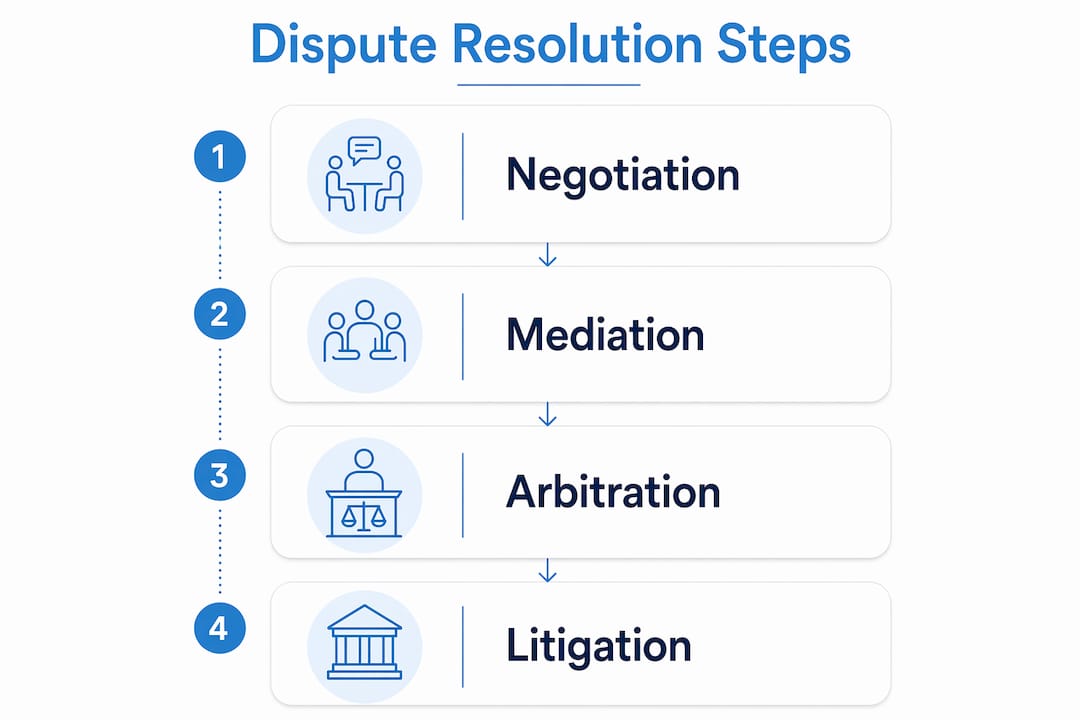
Serious injury claim dispute options are the formal and informal methods available to resolve disagreements about compensation without going straight to court. The four main paths are negotiation, mediation, arbitration, and litigation. Each offers a different balance of cost, speed, and control over the outcome. Knowing which option suits your situation, and when to use it, can be the difference between a fair settlement and years of unnecessary legal proceedings. Frameworks like the Serious Injury Guide and pre-action protocols shape how these options work in practice, and Carelawyers helps claimants in Sydney navigate every stage.
What are the main serious injury claim dispute options?
Negotiation is the starting point for almost every personal injury dispute resolution process. It is a direct discussion between the claimant and the insurer or defendant, with the goal of reaching a voluntary agreement without formal proceedings. No third party makes a decision. Both sides exchange offers and counter-offers until they agree or reach an impasse.

Portal-based claim systems typically limit claimants to three counter-offers before the dispute must escalate. That limit matters because it forces claimants to enter each round with a clear strategy, not just a number. Entering negotiation without a full picture of your injuries and future care costs is the most common mistake claimants make.
Settling too early without a complete medical prognosis risks permanent under-compensation. Personal injury claims are a one-time event. Once you accept a settlement, you cannot return for more money if your condition worsens.
Negotiation works best when:
- Liability is clear and not genuinely disputed
- Medical evidence is complete and future care costs are quantified
- Both parties have a realistic view of the claim’s value
- The claimant has legal representation to assess offer fairness
Pro Tip: Before entering any negotiation, obtain a full medical prognosis that covers long-term care needs, lost earning capacity, and rehabilitation costs. An offer that looks reasonable today may be inadequate in five years.
Part 36 offers add another layer of strategy. These formal settlement offers carry automatic costs consequences if a party rejects an offer and then receives a less favourable court judgment. Timing and accuracy in assessing offer value are critical.
How does mediation work in serious injury cases?
Mediation is a voluntary, facilitated process where an impartial third party helps both sides reach a mutually acceptable resolution. The mediator does not decide the outcome. That distinction is fundamental. Mediation is non-adjudicative, meaning the parties retain full control over whether they settle and on what terms.
The practical advantages are significant. Over 50% of mediated personal injury cases settle within one session, with cases typically resolving in 3–6 months compared to 18–24 months for trial. That speed difference has real consequences for claimants managing ongoing medical costs and lost income.
Mediation is not always the right choice at the outset, though. Early mediation can fail when liability is unclear or medical information is incomplete. The best results come when timing, preparation, and mediator expertise align. Rushing to mediation before you have a clear prognosis hands the other side an advantage.
Choosing the right mediator matters as much as choosing the right time. Mediators with specific expertise in personal injury cases, and familiarity with either a facilitative or evaluative model, significantly increase the chance of a successful outcome. A general commercial mediator handling a spinal cord injury claim is not the same as a specialist who understands long-term care economics.
Pro Tip: Bring a clear schedule of loss and a written summary of your medical position to mediation. Mediators move faster when both sides can see the numbers. Vague claims slow the process and weaken your position.
Mediation also fits within the Serious Injury Guide framework, which encourages collaborative resolution for high-value claims. When both parties commit to the Guide’s principles, mediation becomes a natural step rather than a last-ditch effort.
What is arbitration and when does it apply?
Arbitration is a private adjudicative process where an independent arbitrator hears both sides and delivers a binding decision. Unlike mediation, the parties give up control of the outcome once the hearing begins. The arbitrator’s award is final and enforceable, similar to a court judgment.
The contrast with mediation is stark. Mediation keeps decision-making with the parties. Arbitration transfers that power to the arbitrator. That distinction shapes when each option is appropriate.
| Feature | Mediation | Arbitration | Litigation |
|---|---|---|---|
| Decision maker | The parties | Arbitrator | Judge or jury |
| Binding outcome | No | Yes | Yes |
| Confidentiality | Generally yes | Generally yes | No (public record) |
| Cost | Lower | Moderate | Highest |
| Speed | Fastest | Moderate | Slowest |
| Party control | High | Low after hearing | Low |
Arbitration suits situations where both parties want a definitive resolution without the public exposure of court, or where a contractual clause requires it. Some insurance policies and workplace agreements include mandatory arbitration clauses. Read any agreement carefully before signing, because agreeing to arbitration means waiving your right to a court trial.
The confidentiality of arbitration is a genuine advantage in high-value serious injury claims where either party wants to avoid public scrutiny. The finality is a double-edged consideration. A favourable award is enforceable quickly. An unfavourable one is very difficult to appeal.
When does litigation become the right path?
Litigation is court-based proceedings that produce a binding judgment. It is the most expensive and time-consuming option for resolving personal injury disputes, and it should be the last resort after other methods have failed or been exhausted.
That said, litigation readiness is a powerful negotiating tool even before a case reaches court. Having a solicitor with litigation experience signals to insurers that the claimant is serious, and it frequently leads to better settlement discussions before trial. Insurers settle more readily when they know the other side is prepared to go all the way.
Time limits are non-negotiable in litigation. Statutes of limitations for personal injury claims commonly range from 1–6 years, with most jurisdictions setting a two-year deadline. Miss that window and your claim is extinguished, regardless of its merit. Understanding your claim timeline from the outset is not optional.
Key reasons litigation may become necessary:
- The insurer denies liability and refuses to negotiate in good faith
- Mediation and arbitration have failed to produce a fair outcome
- The claim involves complex legal questions requiring judicial determination
- The defendant has no genuine incentive to settle out of court
- Statutory time limits are approaching and no resolution is in sight
Litigation also provides the most thorough discovery process. Documents, expert witnesses, and cross-examination produce a level of scrutiny that other dispute methods do not. For complex workplace injury claims involving disputed liability and multiple parties, that scrutiny can be decisive.
Expert legal representation is not optional in litigation. The procedural rules, evidentiary standards, and tactical decisions involved are beyond what most claimants can manage alone.
How does the Serious Injury Guide shape dispute resolution?
The Serious Injury Guide is a voluntary framework for high-value claims that encourages collaborative management rather than adversarial dispute. It promotes early liability resolution, interim payments to cover immediate needs, and a rehabilitation focus that keeps the claimant’s recovery at the centre of the process.
When both parties commit to the Guide’s principles, disputes are less likely to escalate to arbitration or litigation. Early interim payments reduce the financial pressure that pushes claimants into premature settlements. Rehabilitation support integrated into the claim process also produces better long-term outcomes for claimants, which in turn produces more accurate compensation figures.
| Guide principle | Effect on dispute resolution |
|---|---|
| Early liability resolution | Reduces contested hearings and speeds up settlement |
| Interim payments | Removes financial pressure to settle prematurely |
| Rehabilitation focus | Produces clearer medical evidence for accurate valuation |
| Collaborative approach | Encourages mediation over litigation |
The Guide does not apply to every claim, and participation is voluntary. However, for serious injury claims involving long-term disability, spinal injuries, or significant compensation, it sets a standard of conduct that experienced legal representatives use to hold insurers accountable.
Pre-action protocols serve a similar function. They require parties to exchange information and attempt resolution before commencing court proceedings. Failing to follow them can result in cost penalties, regardless of who wins the case.
Key takeaways
The most effective approach to resolving a serious injury claim is to match the dispute method to the stage of the claim, the clarity of liability, and the completeness of medical evidence.
| Point | Details |
|---|---|
| Start with negotiation | Direct negotiation is the fastest and cheapest first step when liability is clear. |
| Time mediation carefully | Mediation succeeds when medical evidence is complete and both parties are prepared. |
| Understand arbitration’s finality | Arbitration produces a binding decision; review any arbitration clause before agreeing. |
| Use litigation as leverage | Litigation readiness often produces better insurer offers before a case reaches court. |
| Know your time limits | Personal injury time limits commonly start from two years; missing them ends your claim. |
Why timing is the most underrated factor in dispute resolution
Most claimants I work with focus on which dispute method to use. The harder question is when to use it. Choosing mediation before liability is established, or negotiating before a full prognosis is in hand, hands the other side a structural advantage that is very difficult to recover from.
The Serious Injury Guide exists precisely because the industry recognised that early, collaborative management produces better outcomes than adversarial posturing. Yet many claimants still feel pressure to resolve quickly, often because of financial stress. That pressure is real, but accepting an interim payment or a structured early settlement without understanding your long-term care needs can mean accepting a fraction of what you are genuinely owed.
My observation is that claimants who treat dispute resolution as a strategic process, rather than a procedural hurdle, consistently achieve better outcomes. That means building your medical evidence before entering any formal process, understanding the costs consequences of formal offers, and having legal representation that is genuinely prepared to litigate if necessary. The threat of litigation is only credible if it is real. Insurers know the difference between a claimant who is bluffing and one who is ready.
The other mistake I see regularly is treating these four options as a strict sequence. Negotiation, mediation, arbitration, and litigation are not always steps on a ladder. Sometimes mediation is the right first move. Sometimes early litigation readiness is the best negotiating tool you have. The skill is in reading the specific dynamics of your claim and choosing accordingly.
— Daniel
Carelawyers: serious injury dispute support in Sydney
Carelawyers works with individuals and families across Sydney who are navigating the full range of personal injury dispute resolution options, from initial negotiation through to court proceedings. With a success rate of over 99% of claims won, the team brings direct, practical experience to every stage of the dispute process.

Whether your claim involves a car accident, a workplace injury, or a complex long-term disability, Carelawyers provides clear advice on which dispute path suits your situation and when to use it. Clients speak directly to their lawyer, not a case manager or a call centre. For a clear picture of your options and entitlements, visit the serious injury claim guide or speak with the team at Carelawyers today.
FAQ
What are the four main options for resolving a serious injury claim?
The four main serious injury claim dispute options are negotiation, mediation, arbitration, and litigation. Each differs in cost, speed, and how much control the parties retain over the outcome.
When is mediation the best choice for a personal injury dispute?
Mediation works best after liability is established and medical evidence is complete. Over 50% of mediated cases settle in one session, making it significantly faster than going to trial.
How is arbitration different from mediation in injury claims?
Arbitration produces a binding decision made by an arbitrator, while mediation is non-binding and keeps decision-making with the parties. Agreeing to arbitration means giving up the right to a court trial.
What happens if I miss the time limit for my personal injury claim?
Personal injury time limits commonly range from one to six years, with most set at two years. Missing the deadline typically ends your right to claim, regardless of how strong your case is.
Do I need a lawyer for serious injury dispute resolution?
Legal representation is not legally required for negotiation or mediation, but it is strongly advisable. Solicitor expertise signals readiness to insurers and consistently produces better settlement outcomes across all dispute methods.


