

Role of workers compensation commission: your 2026 guide
The Workers Compensation Commission is the independent state agency responsible for administering and adjudicating workers’ compensation claims impartially. Most injured workers know they have rights after a workplace injury, but far fewer understand which body actually enforces those rights. The role of workers compensation commission is to sit between you, your employer, and the insurer as a neutral decision-maker. It is not your advocate. It is not your enemy. It is the official tribunal that applies workers’ compensation law and resolves disputes through a formal, structured process.
What are the primary functions of a workers compensation commission?
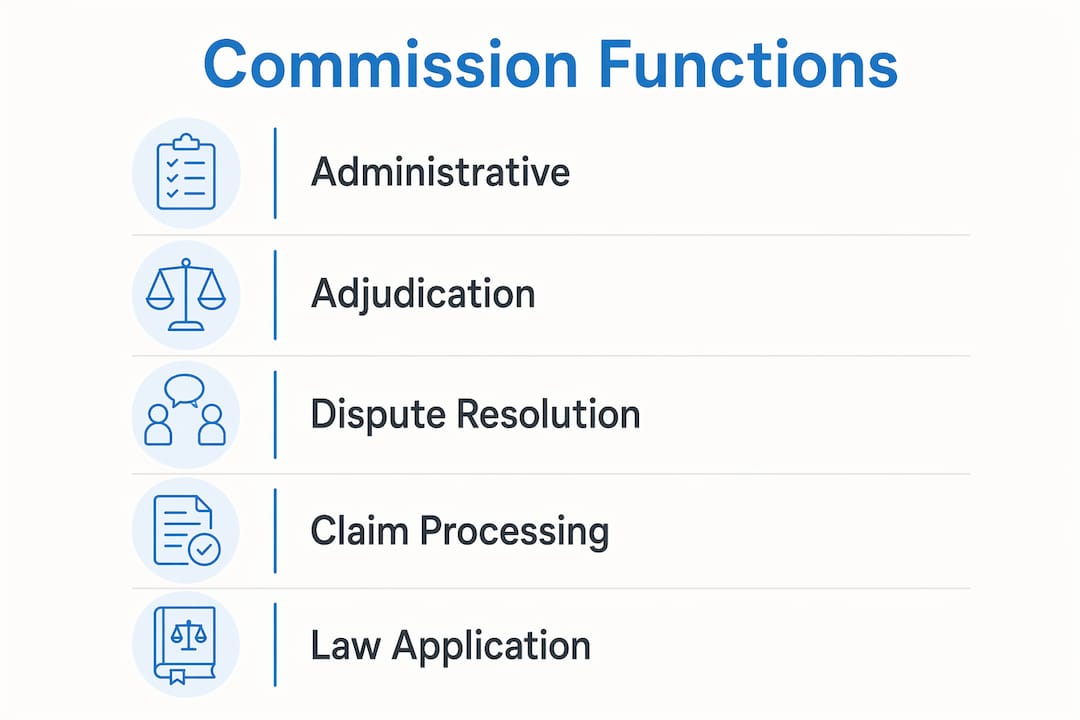
A workers compensation commission performs two distinct roles: administrative and judicial. Understanding both helps you avoid the most common mistake injured workers make, which is treating the commission as an informal advice centre rather than a formal tribunal.

On the administrative side, the commission receives and processes injury reports, provides official claim forms, and monitors employer compliance with workers’ compensation legislation. It also oversees employers who choose to self-insure. Employers with sufficient financial capacity may self-insure with commission approval, but they remain under full commission oversight and must still comply with all claims requirements.
On the judicial side, the commission hears contested claims, approves settlements, and issues binding decisions enforceable by law. Commissioners act as judges in these proceedings. The key administrative and judicial functions include:
- Receiving injury reports and processing initial claim filings
- Providing official forms and procedural information to claimants
- Monitoring employer and insurer compliance with compensation legislation
- Conducting formal hearings before appointed commissioners
- Approving negotiated settlements between parties
- Issuing binding decisions that carry legal weight
- Overseeing both insured and self-insured employer claims
Pro Tip: Keep copies of every document you submit to the commission. Commissioners rely on the written record, and missing paperwork can delay or derail your claim.
The commission does not take sides. It applies the law as written and decides disputes based on evidence. That distinction matters enormously when you are preparing your case.
How does the dispute resolution process work?
The commission uses a multi-tiered dispute resolution process that moves from administrative review through to judicial appeal. Each tier has strict procedural rules and deadlines. Missing a deadline at any stage can seriously damage your claim.
The typical process unfolds in the following sequence:
- Injury report and initial filing. You or your employer lodges an injury report with the commission. The commission registers the claim and assigns it for administrative review.
- Administrative review. Commission staff assess whether the claim meets basic eligibility requirements. This stage is not a hearing. It is a paper-based review of your documentation.
- Formal hearing before a commissioner. If a dispute arises, the matter proceeds to a hearing. A single commissioner presides, acting in a judicial capacity. Both sides present evidence and submissions.
- Full commission review. Either party can request a review by a panel of commissioners. This is a de novo review, meaning the panel re-examines the facts from scratch rather than simply reviewing the original decision.
- Appeal to a court. Further appeals go to a court of appeals, but courts limit appeals to questions of law only. Courts do not re-examine factual findings made by the commission.
Pro Tip: Treat every commission hearing as you would a court appearance. Dress professionally, bring all supporting documents, and never assume the commissioner already knows your situation.
Administrative law experts note that commission processes aim to be more accessible than courts, but they still require strict adherence to formal procedures and deadlines. Accessibility does not mean informal. Injured workers who miss procedural steps often find their claims stalled or dismissed on technical grounds, not on the merits of their injury. You can read more about what to expect at each stage in this workplace injury claim process guide.
What is the difference between the Workers Compensation Act and the commission?
Many injured workers confuse the Workers’ Compensation Act with the Workers Compensation Commission. The confusion is understandable, but the distinction is critical. The Act sets the law; the commission administers and enforces it.
Think of it this way. The Act is the rulebook. It defines what injuries are covered, what benefits you are entitled to, and what obligations your employer carries. The commission is the referee who applies those rules to your specific situation.
The key distinctions are:
- The Workers Compensation Act is legislation passed by parliament. It creates the legal rights and obligations for workers, employers, and insurers.
- The Workers Compensation Commission is the state agency created by that legislation to apply and enforce its provisions through adjudication and administration.
- The commission is not your employer, your insurer, or your legal representative. It is an independent agency applying the law impartially.
- Terminology confusion is common. A corporate “compensation committee” is a board-level governance function with no connection to workers’ compensation claims. The two are entirely different bodies.
Understanding this separation stops injured workers from expecting the commission to advocate for them. The commission will hear your case fairly, but it will not build your case for you. That is your responsibility, ideally with legal support.
How should injured workers interact with the commission?
Effective interaction with the commission starts the moment an injury occurs. Injured workers should immediately report workplace injuries, seek authorised medical treatment, and file the required compensation forms without delay. Active engagement in the claims process, including tracking your medical status and responding promptly to commission requests, is the single most reliable way to keep your claim moving forward.
The practical steps that protect your claim include:
- Report your injury to your employer in writing as soon as possible after it occurs
- Seek treatment from a medical provider authorised under your state’s compensation scheme
- File all required claim forms accurately and within the prescribed time limits
- Respond to every commission request for information or documentation promptly
- Comply with medical authorisation requirements and treatment guidelines set by the commission
- Prepare thoroughly for any formal hearing, including organising witness statements and medical reports
- Work with a legal representative to build and present your case effectively
Pro Tip: Never assume a verbal report to your employer is sufficient. A written record of your injury report is your first line of protection if the claim is later disputed.
The formal nature of commission hearings catches many injured workers off guard. Commission processes are formal administrative tribunals with structured hearing sequences and strict evidentiary requirements. Claimants who treat hearings as informal conversations often miss critical deadlines or fail to present evidence in the required format. Understanding the workers compensation claim process before you appear gives you a significant advantage.
Workers’ rights and benefits under the compensation scheme only materialise when claims are properly lodged and pursued. The commission provides the forum, but you must use it correctly.
Key takeaways
The Workers Compensation Commission is a neutral, independent tribunal that administers and enforces workers’ compensation law. It does not advocate for injured workers, but it provides the formal forum where their rights are decided.
| Point | Details |
|---|---|
| Commission is a neutral body | It applies the law impartially and does not represent workers, employers, or insurers. |
| Two distinct roles | The commission performs both administrative functions and judicial hearings through appointed commissioners. |
| Multi-tiered dispute process | Disputes move from administrative review through formal hearings, full commission review, and court appeal. |
| Act versus commission | The Workers Compensation Act sets the law; the commission administers and enforces it. |
| Procedural compliance is critical | Missing deadlines or treating hearings informally can derail a valid claim on technical grounds. |
What I’ve learned from watching injured workers navigate the commission
The most common mistake I see is injured workers arriving at commission hearings expecting sympathy. The commission is not designed to be sympathetic. It is designed to be fair. Those are very different things.
The commission’s impartial “referee” role is actually a feature, not a flaw. It means the insurer cannot pressure the commission any more than you can. Both sides stand before the same neutral decision-maker. The problem is that insurers and employers typically arrive with experienced legal representation, while injured workers often do not. That imbalance is where outcomes are decided, not in the merits of the injury itself.
The other pitfall I see regularly is injured workers who confuse procedural compliance with legal strategy. Filing forms on time is the floor, not the ceiling. Building a persuasive evidentiary record, understanding how commissioners weigh medical evidence, and knowing when to accept a settlement versus push for a hearing. These are the decisions that determine real outcomes. You can explore workers comp versus common law options to understand which path suits your situation.
The commission gives you a fair process. What you do with that process depends entirely on how well you prepare.
— Daniel
How Carelawyers supports injured workers at the commission
Carelawyers has spent over a decade helping injured workers in Sydney and NSW prepare for and succeed at workers’ compensation proceedings. With a success rate of over 99% of claims won, the team understands exactly what the commission expects and how to present your case to meet those expectations.

When you work with Carelawyers, you speak directly to your lawyer. No intermediaries, no jargon. The team handles claim preparation, commission correspondence, hearing representation, and procedural compliance so nothing falls through the cracks. If you have been injured at work and need to understand your workplace rights after serious injury, Carelawyers offers a no-win, no-fee consultation to assess your position and map out your next steps.
FAQ
What does a workers compensation commission actually do?
A workers compensation commission is the independent state agency that administers workers’ compensation law, processes injury claims, and adjudicates disputes between injured workers, employers, and insurers through formal hearings and binding decisions.
Is the commission on the injured worker’s side?
The commission is a neutral body. It applies the law impartially and does not advocate for workers, employers, or insurers. Its role is to decide disputes fairly based on the evidence presented.
What happens if I disagree with a commission decision?
You can request a full commission review, where a panel re-examines the facts from scratch. If the dispute involves a question of law, you may appeal further to a court of appeals.
What is the difference between the Workers Compensation Act and the commission?
The Workers Compensation Act is the legislation that sets out your rights and entitlements. The commission is the state agency created to administer and enforce that legislation through claims processing and adjudication.
Do I need a lawyer to deal with the commission?
You are not legally required to have a lawyer, but commission hearings are formal administrative tribunals with strict procedural and evidentiary rules. Legal representation significantly improves your ability to present a complete and persuasive case.


