

Pedestrian accident compensation steps: 2026 Australia guide
Getting hit by a car as a pedestrian is terrifying. What comes next, the medical bills, the time off work, the insurance calls, can feel just as overwhelming. The good news is that the compensation process for pedestrians in Australia follows a clear sequence, and knowing those steps early makes a real difference to your outcome.
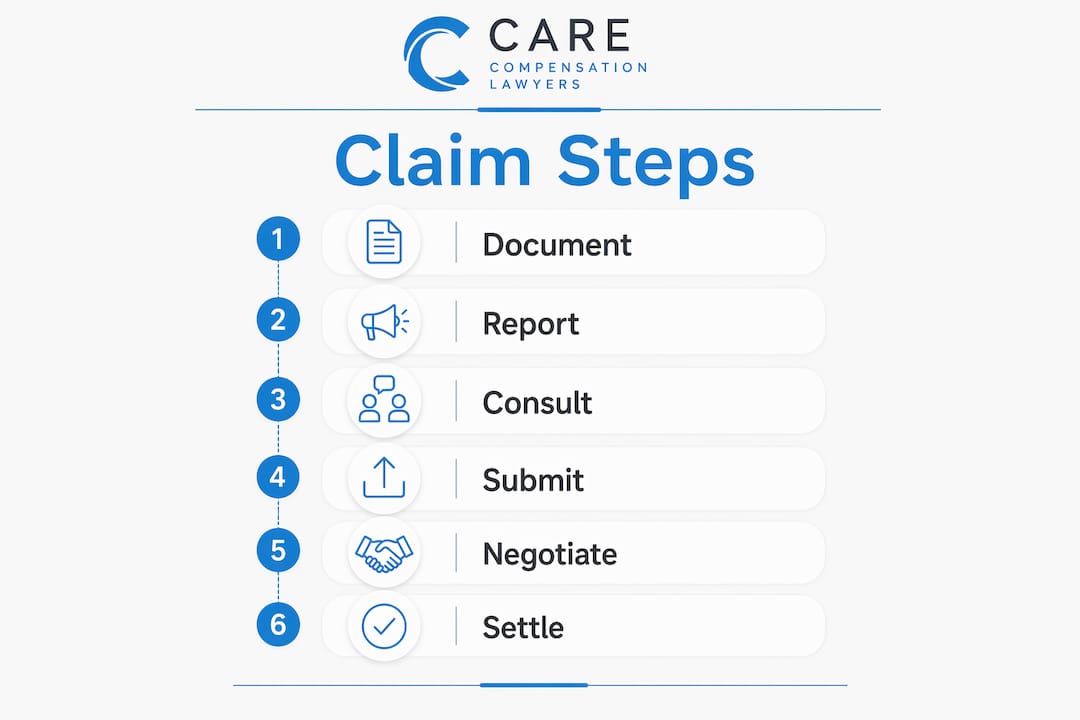
Here is the core process at a glance:
- Seek immediate medical attention, even if injuries seem minor at first
- Report the accident to police and obtain a copy of the report
- Collect evidence at the scene: photos, witness contact details, driver information
- Notify the relevant insurer under your state’s compulsory third party (CTP) scheme
- Document all medical treatment, out-of-pocket costs, and the impact on your daily life
- Consult a personal injury lawyer before making any formal statements or accepting offers
- Lodge your pedestrian injury claim within the applicable time limits (typically within two years; missing this deadline ends your right to compensation in most Australian states)
- Negotiate a settlement or, where necessary, pursue the matter through the courts
Each of these steps carries weight. Miss one, and you risk a reduced payout or a claim that fails entirely.
Who can claim, and what types of pedestrian accidents are covered?
Most pedestrians injured on Australian roads through someone else’s negligence have the right to claim compensation. You do not need to be completely blameless to qualify. Australian law recognises that fault is often shared, and a partial contribution to the accident does not automatically bar you from recovering damages.
The types of incidents that typically give rise to a valid claim include:
- Vehicle collisions at intersections or crossings: Drivers who fail to give way at marked or unmarked crossings, or who run red lights, are the most common source of pedestrian injury claims.
- Footpath incidents: A vehicle mounting a kerb, reversing out of a driveway without checking, or a delivery vehicle blocking a path and forcing pedestrians onto the road.
- Hit-and-run accidents: Where the driver flees the scene, claims can often still proceed through the Nominal Defendant scheme administered by bodies such as the Motor Accident Insurance Commission in Queensland, which covers victims of unidentified or uninsured vehicles.
- Car park and private property collisions: Negligent driving in car parks or on private property can still attract liability.
- Accidents involving cyclists or other road users: Pedestrians struck by cyclists on shared paths may also have a claim path, though the legal framework differs from motor vehicle claims.
Every driver in Australia owes pedestrians a duty of care. When that duty is breached and you suffer injury as a result, the legal basis for a claim exists. State-specific rules do apply, particularly around which insurer to notify and how the CTP scheme operates, so the jurisdiction where the accident occurred matters.
Partial fault does not disqualify you. Under Australian comparative negligence principles, your compensation is reduced proportionally to your share of fault, but you can still recover. A pedestrian found partly at fault would receive compensation reduced proportionally to their share of fault. The key is having the evidence and legal support to keep that fault attribution as low as possible.
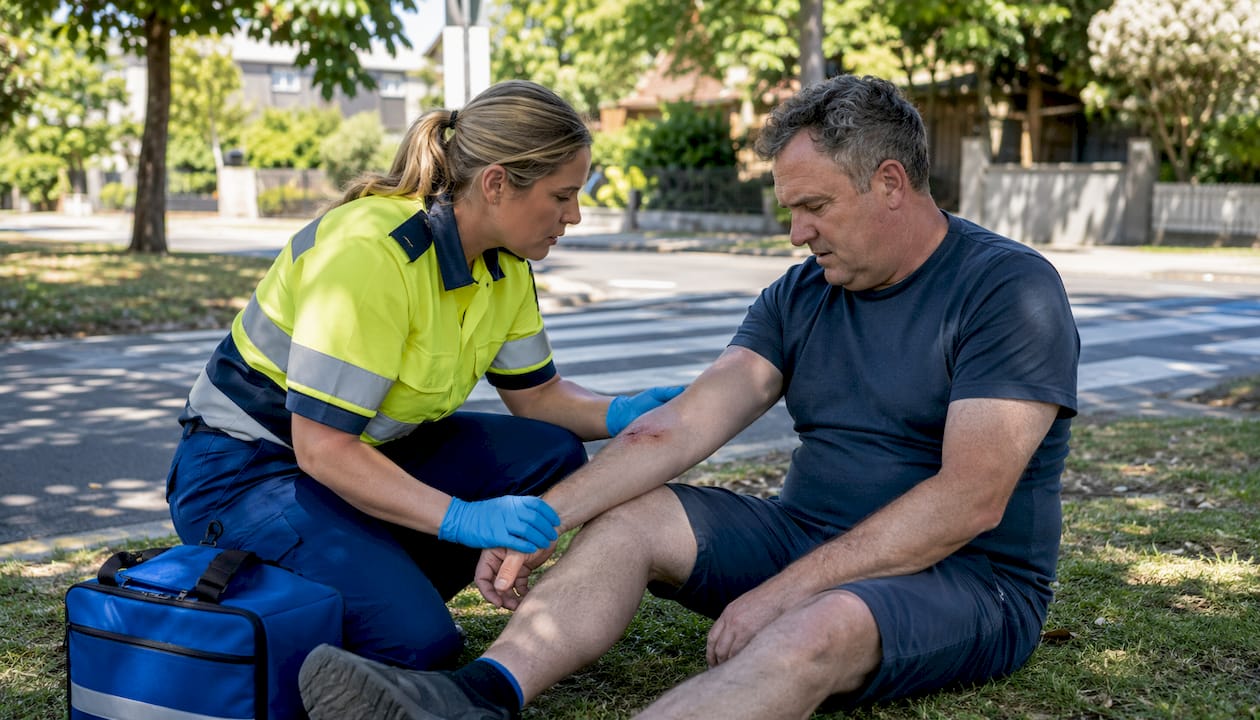
Step-by-step: what to do after a pedestrian accident
The actions you take in the hours and days after an accident shape the strength of your claim. Here is the sequence that protects both your health and your legal position.
Get to safety and call for emergency help. Move out of traffic if you can do so safely. Call 000 immediately. Even if you feel you can walk away, adrenaline masks pain, and injuries like internal bleeding or spinal trauma may not be obvious for hours.
See a doctor the same day. A hospital emergency department or GP visit creates a contemporaneous medical record linking your injuries to the accident. Gaps between the accident and your first medical appointment give insurers room to argue your injuries were pre-existing or unrelated.
Report the accident to police. In Western Australia, traffic crashes must be reported to police when there is injury, death, or property damage. Queensland residents can use PoliceLink for non-emergency reporting. Get the event or report number; you will need it for your claim.
Collect evidence at the scene. Photograph the road, the vehicle, any skid marks, traffic signals, and your visible injuries. Get the driver’s name, licence number, vehicle registration, and insurer details. Ask any witnesses for their names and phone numbers before they leave.
Document your injuries and recovery daily. A personal injury journal, written in your own words each day, records how your injuries affect your sleep, mobility, work capacity, and emotional wellbeing. Courts and insurers give weight to contemporaneous accounts.
Notify the relevant CTP insurer. Each state has its own scheme. In Western Australia, the Insurance Commission of WA handles motor injury claims. Notification deadlines vary by state, so act promptly.
Consult a personal injury lawyer before signing anything. Free initial consultations are standard at most personal injury firms. A lawyer will assess your claim, advise on the applicable scheme, and prevent you from inadvertently accepting a low offer or making admissions that reduce your payout.
Avoid these common mistakes:
- Do not admit fault or apologise at the scene, even if you feel partly responsible.
- Do not give a recorded statement to the at-fault driver’s insurer without legal advice.
- Do not accept the first settlement offer without having it reviewed.
- Do not delay treatment to “wait and see” how injuries develop.
Pro Tip: Start a dedicated folder, physical or digital, on the day of the accident. Keep every receipt, every medical letter, every text message related to the incident. Organised documentation is one of the clearest signals to an insurer that you are serious about your claim.
How fault affects your pedestrian accident compensation claim
Fault is where many pedestrian injury claims get complicated. Insurers do not simply accept that the driver was entirely responsible. Contributory negligence arguments are a standard tactic: the insurer raises the possibility that you crossed against a signal, were distracted by a phone, or stepped out without checking, and uses that to reduce what they pay.

The legal framework in Australia applies comparative negligence across jurisdictions. Under this approach, some recovery remains possible even when the pedestrian shares fault, but the payout is reduced by the percentage of fault attributed to them. A finding of contributory negligence reduces the recovery amount proportionally to the pedestrian’s share of fault.
What counters insurer fault arguments effectively:
- Traffic signal and CCTV footage showing the pedestrian had a green walk signal or the driver ran a red light
- Witness statements from people who saw the accident unfold
- Expert accident reconstruction analysis of vehicle speed, braking distance, and road conditions
- Medical evidence establishing that the pedestrian’s behaviour was not a contributing cause of the severity of injury
Insurers regularly raise contributory negligence arguments to reduce their liability. Skilled lawyers challenge these using evidence such as traffic patterns, witness accounts, and accident reconstruction, often achieving a significant reduction in the fault percentage attributed to the pedestrian. The difference between a 30% and a 5% fault finding can represent tens of thousands of dollars in a serious injury claim.
Legal representation makes a measurable difference here. Lawyers who specialise in pedestrian claims know which evidence to gather, how to obtain CCTV footage before it is overwritten (usually within a limited timeframe before footage is overwritten), and how to rebut insurer arguments with authority. Attempting to negotiate fault attribution without that expertise puts you at a structural disadvantage against an insurer whose adjusters handle these arguments every day.
What compensation can you expect from a pedestrian accident claim?
Compensation in Australian pedestrian accident claims falls into two broad categories: economic damages and non-economic damages. Understanding both helps you assess whether a settlement offer genuinely reflects your losses.
| Compensation category | What it covers | Examples |
|---|---|---|
| Medical expenses | Past and future treatment costs | Hospital stays, surgery, physiotherapy, medication |
| Lost income | Wages lost during recovery | Time off work, reduced capacity to earn |
| Rehabilitation | Ongoing recovery costs | Occupational therapy, aids and equipment |
| Pain and suffering | Non-economic impact of injury | Chronic pain, anxiety, loss of enjoyment of life |
| Out-of-pocket expenses | Incidental costs caused by the accident | Transport to appointments, home help, care costs |
| Loss of quality of life | Permanent impact on daily functioning | Inability to pursue hobbies, care for family |
Economic damages are calculated from actual figures: your payslips, medical invoices, and receipts. Non-economic damages are assessed differently. In most Australian states, they are subject to a threshold and a cap, meaning minor injuries attract little or no non-economic component, while serious permanent injuries attract the largest awards.
Settlement amounts vary considerably based on:
- Severity and permanence of the injury: A fractured wrist that heals fully is assessed very differently from a spinal injury causing permanent disability.
- Clarity of liability: Where the driver’s fault is clear and documented, settlement tends to be faster and higher.
- Your pre-accident income: Lost earning capacity is calculated against what you actually earned, so higher earners generally recover more under this head.
- Future medical needs: Expert medical reports projecting ongoing treatment costs carry significant weight in serious injury claims.
Simple claims with clear liability and minor injuries often resolve in 4–9 months. Disputed or serious injury matters can extend well beyond a year. Knowing this timeline helps you plan financially and avoid pressure to accept an early, undervalued offer.
Non-economic damages, particularly pain and suffering, are frequently undervalued by claimants who focus only on their medical bills. The broader impact on your life, your relationships, your sleep, your ability to do the things you did before, forms a legitimate and often substantial part of what you are owed.
Pro Tip: Never accept a settlement offer before your treating doctors have given a clear prognosis. Settling too early, before the full extent of your injuries is known, can leave you unable to claim for future costs that emerge later.
How expert legal support improves your pedestrian accident claim
The gap between what an insurer initially offers and what a well-represented claimant ultimately receives is often substantial. Insurance adjusters use detailed medical bills, economic evidence, and expert testimony to push settlements lower. A lawyer who specialises in pedestrian claims uses exactly the same tools to push back.
Carelawyers operates differently from the large volume firms where your file moves between case managers and you rarely speak to the same person twice. Their model is direct contact with your lawyer throughout the process. That matters practically: when new medical evidence comes in, when an insurer makes a low offer, or when a deadline is approaching, you get a real answer from the person who knows your case.
The practical advantages of early legal engagement include:
- Evidence preservation: CCTV footage, dashcam recordings, and witness memories all degrade quickly. A lawyer acting promptly can issue preservation requests and obtain footage before it is deleted.
- Correct claim pathway: Australia’s state-based CTP schemes have different forms, deadlines, and procedural requirements. Filing under the wrong scheme or missing a notification deadline can be fatal to a claim.
- Fault negotiation: As noted above, reducing the contributory negligence finding by even 10–15 percentage points can add tens of thousands of dollars to a serious injury settlement.
- Settlement strategy: Experienced lawyers know when an insurer’s offer reflects genuine assessment and when it is a low-ball figure designed to close the file cheaply. Negotiation with insurance adjusters without legal backing routinely produces undervalued outcomes.
Legal experts stress that claims often fail to fully compensate injured pedestrians if not professionally pursued, due to insurer tactics and the complexity of state-based schemes. Early legal consultation is the single most effective step a pedestrian can take to protect the value of their claim.
Carelawyers offers a no-win, no-fee arrangement for eligible pedestrian accident claims, meaning you do not pay legal fees unless your claim succeeds. Their 99%-plus success rate across personal injury matters reflects both the quality of case selection and the depth of preparation they bring to each file.
Pro Tip: Contact a lawyer within the first week after your accident if possible. The earlier evidence is secured and the claim pathway is confirmed, the stronger your position when negotiations begin.
Carelawyers: direct legal support for injured pedestrians

Pedestrian accident claims are not straightforward, and the insurer on the other side of your claim is not working in your interest. Carelawyers gives injured pedestrians in Sydney and across Australia something the large firms rarely deliver: direct access to the lawyer handling your matter, from the first call through to settlement.
Where other firms route you through call centres and junior staff, Carelawyers keeps you connected to the person who knows your case. Their specialisation in personal injury, including pedestrian accidents, car accidents, and workplace injuries, means the legal strategy applied to your claim is built on genuine experience with the same insurer arguments and fault tactics you are facing. With a success rate exceeding 99% of claims won and a no-win, no-fee model, the financial risk of getting legal advice is removed entirely.
If you have been injured as a pedestrian and want to understand what your claim is worth, speak to Carelawyers for a free, no-obligation consultation today.
Key takeaways
The most effective approach to pedestrian accident compensation in Australia is to act quickly, document everything, and engage a personal injury lawyer before making any formal statements or accepting settlement offers.
| Point | Details |
|---|---|
| Time limits apply | Most Australian states require that you lodge your pedestrian injury claim within two years; missing this deadline ends your right to compensation. |
| Partial fault does not bar recovery | Comparative negligence reduces your payout proportionally but does not prevent you from claiming, even if you were partly at fault. |
| Claim timeline varies | Simple claims with clear liability often resolve in 4–9 months; disputed or serious injury matters can take considerably longer. |
| Document everything from day one | Medical records, police reports, photos, and a daily injury journal form the evidentiary foundation of a successful claim. |
| Carelawyers offers direct legal support | With a no-win, no-fee model and a success rate exceeding 99%, Carelawyers connects injured pedestrians directly with their lawyer throughout the claim process. |


