

Motorcycle accident claim process guide for riders
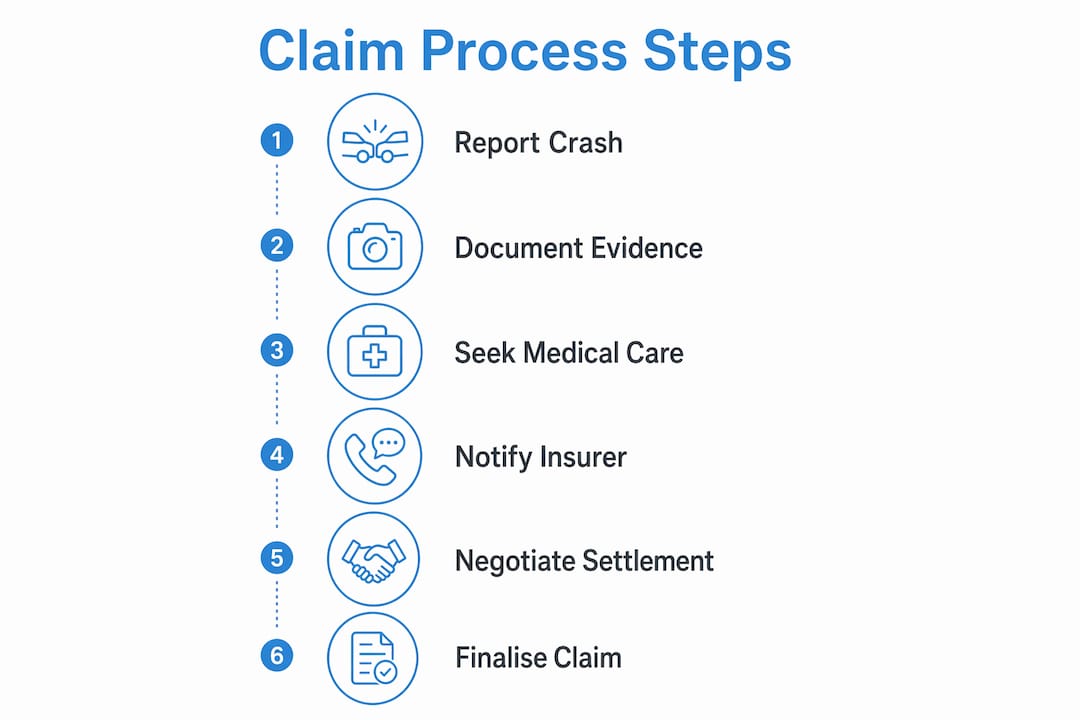
The motorcycle accident claim process is the formal method injured riders use to pursue compensation for medical costs, lost income, and crash-related damages. Knowing how to navigate it correctly is the difference between a fair payout and a denied or undervalued claim. This guide walks you through every stage, from the scene of the crash through to settlement or litigation, so you can protect your rights and recover what you are owed.
What to do immediately after a motorcycle crash
The actions you take in the first hour after a crash directly shape the strength of your claim. Physical evidence degrades fast. Skid marks and road debris can disappear within an hour, so document everything before you leave the scene.
Follow these steps in order:
- Call emergency services. Get police and ambulance on the way immediately. A police report is third-party documentation that no insurer can easily dismiss.
- Photograph everything. Capture vehicle positions, road conditions, your damaged safety gear, tyre marks, and any visible injuries. Take wide shots and close-ups.
- Collect witness details. Names and phone numbers. Witnesses leave quickly, and their accounts can be decisive when fault is disputed.
- Record your own account. Write down or voice-record exactly what happened while it is fresh. Do not admit fault to anyone at the scene, including the other driver.
- Request the police report number. This gives you a reference point for all future communications with insurers.
If a police report is not available for any reason, a claim without a police report is still possible, but the evidentiary burden on you increases significantly.
Pro Tip: Photograph your damaged helmet and riding jacket before discarding them. Courts and insurers treat protective gear as physical evidence of impact force.

Why medical care is critical to your compensation
Adrenaline masks pain. Riders often walk away from serious crashes feeling fine, only to discover spinal or soft tissue injuries days later. Seeking medical attention on the day of the accident creates a documented link between the crash and your injuries. That link is the foundation of your claim.
Gaps in treatment are one of the most common reasons insurers reduce or deny payouts. Consistent medical documentation and evidence of injury impact are what insurers look for when assessing credibility. If you skip appointments or decline recommended therapy, the insurer will argue your injuries were not serious.
Keep a daily injury journal. Record your pain levels, sleep disruption, inability to work, and any activities you can no longer do. This translates subjective suffering into compensable evidence that medical bills alone cannot capture.
Do not settle your claim before reaching Maximum Medical Improvement (MMI). Settling before MMI often results in undervalued claims that exclude future rehabilitation costs, ongoing treatment, and long-term income loss. Your condition needs to stabilise before anyone can accurately calculate what you are owed.
Pro Tip: Ask your treating doctor to document every symptom at each visit, including minor ones. Delayed-onset injuries like whiplash or nerve damage are far easier to claim when they appear in early medical notes.
How to notify your insurer and handle adjusters
Report your accident to your insurer promptly. Notification within 24 hours is best practice, and most policies require notification within 30 to 60 days. Missing that window can void your claim entirely.
When you contact your insurer, follow this sequence:
- Provide basic facts only. Date, time, location, and the other party’s details. Nothing more.
- Request your claim number immediately. This prevents communications from being lost and creates an official paper trail.
- Decline recorded statements. Insurance adjusters are trained to interpret casual comments as admissions of fault or injury minimisation. You are not legally required to give a recorded statement without legal advice.
- Keep a communication log. Record the date, time, name, and content of every conversation with the insurer.
- Review your full policy. Check whether you hold uninsured or underinsured motorist coverage. Stacking available coverage layers from your own policy is often necessary when the at-fault driver is underinsured.
Treat the insurer as an adversary, not a partner. Their adjuster’s job is to minimise the payout. Low initial settlement offers are a standard tactic designed to close your claim before you understand its full value. Consult a lawyer before accepting anything.
Pro Tip: Never discuss your injuries in casual terms with an adjuster. Saying “I’m doing okay” is enough for them to argue your injuries are minor.
How to build a strong claim: evidence, fault, and damages
A strong personal injury claim rests on four legal elements of negligence: duty of care, breach of that duty, causation, and damages. You must establish all four to succeed. Evidence is what connects them.
The core evidence types for a motorcycle injury claim are:
| Evidence type | Purpose |
|---|---|
| Police report | Establishes official record of the crash and any traffic violations |
| Photographs and video | Documents scene conditions, vehicle positions, and visible injuries |
| Witness statements | Provides independent accounts that corroborate your version of events |
| Medical records | Links injuries directly to the accident and quantifies treatment costs |
| Expert reports | Accident reconstruction or medical expert opinions for complex claims |
Motorcyclists face a specific challenge called “rider bias.” Riders are 24 times more likely to die per mile than vehicle occupants, yet insurers and juries often apply negative stereotypes about rider behaviour. Building your case as though it will go to trial produces fairer settlements, even when it does not.
A comprehensive claim must include lost wages, future rehabilitation costs, pain and suffering, and reduced quality of life. Relying solely on medical bills leaves significant compensation on the table. Engage a lawyer early to identify and preserve evidence before it disappears, and to calculate the full scope of your damages accurately. Understanding what damages you can claim is the first step to knowing what you are actually owed.
What to expect: settlement, litigation, and deadlines
Over 95% of personal injury claims settle out of court. That figure means most riders never see a courtroom, but it does not mean the process is quick or simple. Settlement negotiations can take months to years depending on the severity of injuries, the complexity of fault, and the insurer’s willingness to negotiate fairly.
The typical resolution path looks like this:
- Demand letter. Your lawyer sends a formal letter to the insurer outlining your injuries, evidence, and the compensation amount you are seeking.
- Counteroffer. The insurer responds, usually with a lower figure. Negotiation begins.
- Mediation. If direct negotiation stalls, a neutral mediator can facilitate agreement without going to court.
- Litigation. When the insurer refuses a fair settlement, filing a lawsuit becomes necessary. This triggers formal discovery, depositions, and potentially a trial.
Time limits are non-negotiable. Statutes of limitations for motorcycle accident lawsuits generally range from 2 to 3 years, but can be as short as 6 months when a government entity is involved. Missing the deadline permanently extinguishes your right to compensation. Check the claim timeline stages that apply to your situation as early as possible.
Never accept a settlement offer before your medical condition has stabilised. Signing early closes the claim permanently, regardless of what future costs emerge.
Key takeaways
A successful motorcycle injury compensation process depends on acting fast, documenting thoroughly, and never settling before your full damages are known.
| Point | Details |
|---|---|
| Act immediately at the scene | Photograph evidence, collect witness details, and obtain the police report number before leaving. |
| Seek same-day medical care | Adrenaline masks injuries; early treatment creates the documented link insurers require. |
| Treat insurers as adversaries | Decline recorded statements and never accept a first offer without legal advice. |
| Build a full damages picture | Include lost wages, future rehabilitation, and pain and suffering, not just medical bills. |
| Observe time limits strictly | Statutes of limitations range from 6 months to 3 years; missing them ends your claim permanently. |
What I have learned after years of watching riders lose claims they should have won
The single biggest mistake I see is riders treating the insurance company like a neutral party. They answer every question openly, accept the first offer out of exhaustion, and sign away their rights before they know what their injuries will actually cost them over the next five years. The insurer is not there to help you recover. They are there to close your file at the lowest possible number.
The second mistake is underestimating rider bias. Motorcyclists carry a reputational disadvantage in claims. Insurers and, frankly, some decision-makers assume riders take risks. That assumption costs riders money unless you counter it with meticulous, professional documentation from day one. Treat your claim like a legal case from the moment the crash happens, not from the moment you decide to get a lawyer.
The third thing I would tell any rider is this: patience pays. Settling early feels like relief, but it is often a financial mistake that cannot be undone. The riders who wait until their condition stabilises, who document every impact on their daily life, and who understand the no win no fee arrangements available to them, consistently recover more than those who rush. Your claim has a real value. Know it before you sign anything.
— Daniel
Carelawyers: motorcycle accident claim support in Sydney
Carelawyers specialises in motorcycle accident claims across Sydney and NSW, with a success rate of over 99% of claims won. Their team operates on a no win no fee basis, meaning you pay nothing unless your claim succeeds.

From the first consultation, Carelawyers handles evidence gathering, insurer communications, and negotiations on your behalf. If litigation becomes necessary, they take it to court. You speak directly to your lawyer at every stage, with no intermediaries and no jargon. Contact Carelawyers early to protect your claim before evidence disappears and deadlines close in. Visit their motorcycle accident lawyer page to book a free initial consultation today.
FAQ
How long does a motorcycle accident claim take?
Most motorcycle accident claims settle within several months to a few years, depending on injury severity and insurer cooperation. Complex cases involving litigation take longer.
Can I claim if I was partly at fault?
Yes. Contributory negligence rules in Australia allow you to claim even if you shared some fault, though your compensation may be reduced proportionally.
When should I contact a lawyer after a motorcycle crash?
Contact a lawyer as soon as possible after the crash. Early legal involvement protects evidence, prevents costly mistakes with insurers, and ensures deadlines are not missed.
What damages can I claim after a motorcycle accident?
You can claim medical expenses, lost wages, future rehabilitation costs, pain and suffering, and reduced quality of life. Understanding the full scope of damages is critical before accepting any settlement.
What happens if I miss the statute of limitations?
Missing the filing deadline permanently removes your right to compensation. Deadlines range from 6 months to 3 years depending on the circumstances, so act promptly.


