

How to choose a workers comp lawyer: your guide
A workers compensation lawyer is a licensed legal specialist who represents injured workers in claims against employers and insurers. Choosing the right one is the single most consequential decision you make after a workplace injury. The wrong choice costs you time, money, and the fair outcome you deserve. This choose workers comp lawyer guide walks you through every step: verifying credentials, running consultations, understanding fees, and making a confident final decision.
What qualifications should you verify when choosing a workers comp lawyer?
The first thing to check is whether the lawyer holds a current licence and is in good standing in your state or territory. Licensing and state specialisation are the baseline requirements before any other evaluation begins. A lawyer admitted in Victoria but practising your New South Wales claim is working at a disadvantage from day one.

Specialisation matters more than general legal experience. Specialists in workers compensation law know the deadlines, procedural rules, and appeal pathways specific to your jurisdiction. A generalist personal injury lawyer may handle car accidents and public liability claims alongside workers comp. That breadth dilutes their knowledge of the specific rules that govern your case.
Check credentials through your state’s legal services regulator. In New South Wales, the Law Society of NSW maintains a public register. In Victoria, the Victorian Legal Services Board publishes similar records. These registers confirm whether a lawyer is currently authorised to practise and whether any complaints have been upheld against them.
- Confirm the lawyer’s licence is active and unrestricted in your state
- Verify their primary practice area is workers compensation, not personal injury broadly
- Check for any disciplinary history through your state’s legal regulator
- Ask directly how many workers comp files they currently manage
- Confirm they know the specific insurer or scheme relevant to your claim (icare in NSW, WorkSafe in Victoria)
Pro Tip: Ask the firm’s receptionist which legal scheme your claim falls under before your first appointment. If they cannot answer immediately, that tells you something about the firm’s depth of focus.
How to use initial consultations to evaluate prospective lawyers
Initial consultations with workers comp lawyers carry no fee in most cases. That makes them low-risk opportunities to gather real evidence about a lawyer’s competence and communication style. Treat the consultation as a two-way interview, not a pitch session.
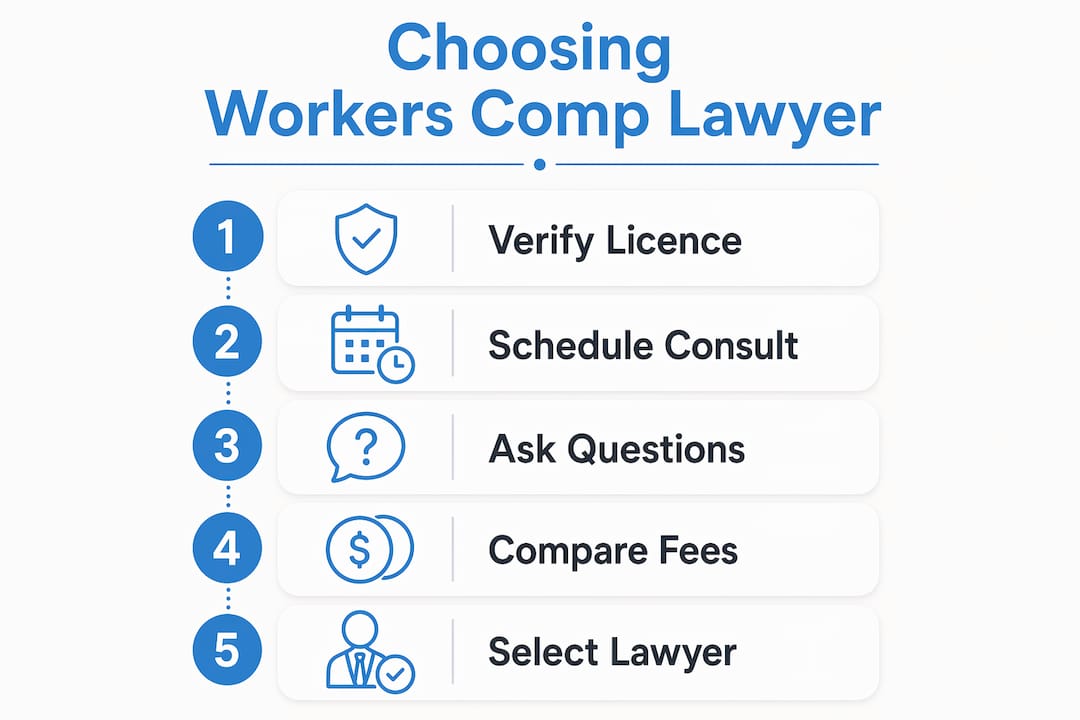
Prepare specific questions before you arrive. The quality of the answers tells you far more than any website biography. Good communication during the free consultation is a strong predictor of how well the lawyer will manage your case over months or years.
Use this numbered sequence to structure your consultation:
- Ask about recent contested hearing experience. Contested hearings handled annually reveal litigation readiness far better than years of practice. A lawyer who settles every file without ever entering a hearing room is not prepared if your insurer disputes your claim.
- Ask about local procedural knowledge. Local procedural familiarity directly affects claim outcomes. Ask which hearing venues they appear in and which arbitrators or commissioners they have appeared before.
- Test their explanation of your rights. Ask them to explain the workplace injury claim process in plain language. If they cannot do that in the first meeting, they will not do it later either.
- Observe responsiveness. Did the firm return your call promptly? Responsive office staff and clear intake explanations predict better ongoing service throughout your claim.
- Watch for signs of overbooking. Difficulty scheduling your initial consultation may signal the lawyer carries too many files to give yours proper attention.
Pro Tip: Bring a written summary of your injury, the date it occurred, and any correspondence from your employer or insurer. A lawyer who reads it carefully before speaking is already showing you how they work.
What are common fee structures for workers comp lawyers?
Workers comp lawyers typically work on a contingency fee basis. This means the lawyer takes a percentage of your compensation if you win, and charges nothing if you lose. The arrangement removes the financial barrier to legal representation for injured workers who cannot afford hourly rates.
The percentage and the trigger point for payment vary between firms and jurisdictions. Written fee agreements must clearly specify the contingency percentage, what counts as a successful outcome, and how out-of-pocket expenses are handled. Verbal agreements on fees create disputes later. Never sign a retainer without a written document that covers all of these points.
Watch for these red flags in fee discussions:
- A lawyer who cannot state their fee percentage clearly in the first meeting
- No written agreement offered before work commences
- Vague language around “expenses” that are separate from the contingency fee
- Pressure to sign quickly before you have read the agreement
- No explanation of what happens to costs if the claim is unsuccessful
Understanding weekly workers comp benefits and the total compensation available helps you assess whether the fee percentage is proportionate to the work involved. A lawyer who explains the full scope of your entitlements before discussing fees is demonstrating the right priorities.
What practical steps help you shortlist the best workers comp lawyer?
Building a shortlist of two to three lawyers and comparing them directly is the most reliable selection method. Relying on a single recommendation, whether from a friend or an online advertisement, skips the comparison step that separates a good choice from a great one.
Start by gathering names through your state’s bar association referral service. The New York City Bar Legal Referral Service operates a no-charge initial referral model; Australian equivalents include the Law Society referral services in each state. These services pre-screen lawyers for relevant experience, which shortens your research time.
Once you have names, use this comparison framework:
| Evaluation factor | What to look for | Red flag |
|---|---|---|
| Licence status | Active, unrestricted, in your state | Lapsed, restricted, or interstate only |
| Specialisation | Workers comp as primary practice area | Mixed personal injury generalist |
| Contested hearing count | Regular appearances in the last 12 months | No hearing experience in recent years |
| Communication style | Clear, plain-language explanations | Jargon-heavy, evasive, or rushed |
| Fee agreement | Written, detailed, percentage stated | Verbal only, vague on expenses |
| Client reviews | Consistent praise for responsiveness | Complaints about delays or poor contact |
Trust your instincts on personal fit. You will share sensitive medical and financial information with this person for months. If the first call leaves you feeling dismissed or confused, that feeling does not improve. A lawyer who listens carefully, asks good questions, and explains your workplace rights after serious injury clearly is worth more than one with a longer list of credentials but poor communication.
Pro Tip: Search the lawyer’s name alongside your state’s workers compensation tribunal or commission. Lawyers who appear regularly in published decisions are demonstrably active in contested matters.
Key takeaways
Choosing the right workers comp lawyer requires verifying specialisation, testing communication in the first consultation, and securing a written fee agreement before any work begins.
| Point | Details |
|---|---|
| Verify licence and specialisation | Confirm the lawyer is licensed in your state and focuses primarily on workers compensation law. |
| Use consultations as vetting sessions | Treat the free initial meeting as a two-way interview and ask about contested hearing experience. |
| Demand a written fee agreement | Get the contingency percentage and expense terms in writing before signing anything. |
| Build a shortlist of two to three | Compare lawyers across specialisation, communication, fees, and client reviews before deciding. |
| Trust communication quality | A lawyer who explains your rights clearly in the first call will manage your case better throughout. |
What I have learned about choosing a workers comp lawyer
The single biggest mistake injured workers make is treating the first lawyer they meet as the only option. I have seen this play out repeatedly. Someone gets a referral from a workmate, meets one lawyer, feels reassured, and signs on the spot. Six months later they are frustrated by poor communication and a settlement offer that does not reflect their actual losses.
The question most people forget to ask is about contested hearings. A lawyer who settles every file without ever appearing before a commissioner is not a litigator. They are a negotiator. Those are different skills. When an insurer disputes your claim, you need someone who is comfortable in a hearing room, not someone who will pressure you into a low settlement to avoid one.
I also think the first phone call is underrated as a test. Call the firm before you book a consultation. Note how quickly they return your call. Note whether the person who answers can tell you anything useful about your type of claim. Responsive intake staff predict the quality of service you will receive throughout the entire claim. If getting a callback takes three days before you are even a client, it will not get faster once you are.
The best workers comp lawyers I have encountered share one trait: they treat the first consultation as a case-assembly exercise. They map your injury facts to the relevant deadlines and jurisdictional requirements immediately. They do not wait for you to ask the right questions. That instinct, to build your case from the first conversation, is what separates a genuinely client-focused lawyer from one who is simply processing files.
— Daniel
How Carelawyers supports injured workers in NSW
Carelawyers operates on a no-win-no-fee basis, which means you pay nothing unless your claim succeeds. The team specialises in workers compensation and personal injury law across New South Wales, with direct access to your lawyer throughout the process. No call centres, no junior staff fielding your questions.

Carelawyers offers a free initial consultation where a qualified lawyer reviews your claim, explains your entitlements, and outlines realistic next steps. The firm reports a success rate of over 99% of claims won. If you are ready to speak with an experienced personal injury lawyer who knows NSW workers compensation law, Carelawyers is a strong starting point. You can also read the full workers compensation claim guide to understand what your claim involves before your first call.
FAQ
What does a workers compensation lawyer do?
A workers compensation lawyer represents injured workers in claims against employers and insurers, managing paperwork, deadlines, negotiations, and hearings on your behalf.
How do I verify a workers comp lawyer’s credentials in Australia?
Check the Law Society register in your state, such as the Law Society of NSW, to confirm the lawyer holds an active, unrestricted practising certificate in workers compensation law.
What questions should I ask a workers comp lawyer?
Ask how many contested hearings they have handled in the past year, what their contingency fee percentage is, and whether they will provide a written fee agreement before work begins.
Do workers comp lawyers charge upfront fees?
Most workers comp lawyers work on a contingency fee basis, meaning no upfront cost and payment only from a successful outcome, but always confirm this in writing before signing.
How many lawyers should I consult before choosing one?
Consult at least two to three lawyers and compare them on specialisation, communication, contested hearing experience, and fee terms before making a final decision.


