

Economic loss car accident claim: your 2026 guide
An economic loss car accident claim is a legal process to recover measurable financial damages caused by injuries sustained in a car accident, covering current and future costs. In Australian personal injury law, these are formally called “economic damages” or “special damages,” and they differ from non-economic damages like pain and suffering. Your claim can include medical expenses, lost wages, reduced earning capacity, property damage, and out-of-pocket costs. Australia’s standard limitation period gives you three years from the date of the accident to lodge a claim, making early action critical.
What types of economic losses can you claim after a car accident?
Economic damages in car accident claims cover every measurable financial loss that flows directly from the accident and your injuries. The scope is broader than most people expect. Missing even one category can leave significant money on the table.
The main categories eligible for compensation include:
- Current medical expenses: Emergency treatment, surgery, hospitalisation, physiotherapy, medication, and specialist consultations.
- Future medical costs: Ongoing rehabilitation, expected surgeries, long-term care, and aids or equipment you will need.
- Lost wages: Income you have already lost while recovering, including bonuses, commissions, and overtime you would have earned.
- Loss of earning capacity: If your injury permanently limits your ability to work at the same level, you can claim the projected difference in lifetime earnings.
- Out-of-pocket expenses: Transport to medical appointments, home modifications, domestic assistance, and childcare costs caused by your injury.
- Property damage: Vehicle repair or replacement costs, plus any personal property damaged in the accident.
Each category requires specific evidence. Medical costs need invoices and clinical records. Lost wages require pay slips, tax returns, and a letter from your employer. Property damage needs repair estimates or a written-off vehicle assessment. Your vehicle accident recovery expenses can add up faster than you realise, so tracking every dollar from day one matters.
Pro Tip: Open a dedicated folder, physical or digital, on the day of the accident. Store every receipt, invoice, and medical record in one place. This single habit prevents the most common reason claims are undervalued.

How do you prove economic loss in a car accident claim?
Proof is the foundation of any successful car accident financial recovery. Without solid evidence, even a legitimate claim can be reduced or rejected. The burden of proof sits with you as the claimant, so building your case starts at the accident scene.
Evidence degrades quickly after an accident. Within 24–72 hours, witnesses leave, skid marks fade, and memories blur. Collecting evidence immediately gives you the strongest possible foundation.
The core evidence types and their impact on your claim are outlined below:
| Evidence type | What it proves | Claim impact |
|---|---|---|
| Police report | Fault, accident circumstances | High: establishes liability |
| Medical records | Injury severity, treatment required | High: links injury to accident |
| Pay slips and tax returns | Pre-accident income level | High: quantifies lost wages |
| Witness statements | Independent account of events | Medium: corroborates your version |
| Photographs and video | Scene conditions, vehicle damage | Medium: visual proof of impact |
| Repair invoices | Property damage costs | Medium: quantifies vehicle loss |
| Expert medical reports | Future care needs, capacity loss | High: supports future loss claims |
Many witnesses leave the accident scene quickly, so identifying and speaking to them before they go is one of the most time-sensitive tasks you face. Get names and phone numbers on the spot.
Comparative negligence also affects your payout. If you are found partly at fault, your compensation reduces proportionally. Some jurisdictions bar recovery entirely if the claimant is more than 51% at fault. In New South Wales, courts apply a proportional reduction based on your share of fault, so understanding how to prove fault in your claim is directly tied to the amount you recover.
Pro Tip: You are not obligated to give a recorded statement to the at-fault driver’s insurer. Refusal cannot alone result in claim denial. Always speak to a lawyer before agreeing to any recorded interview.
What is the typical process and timeline for an economic loss claim?
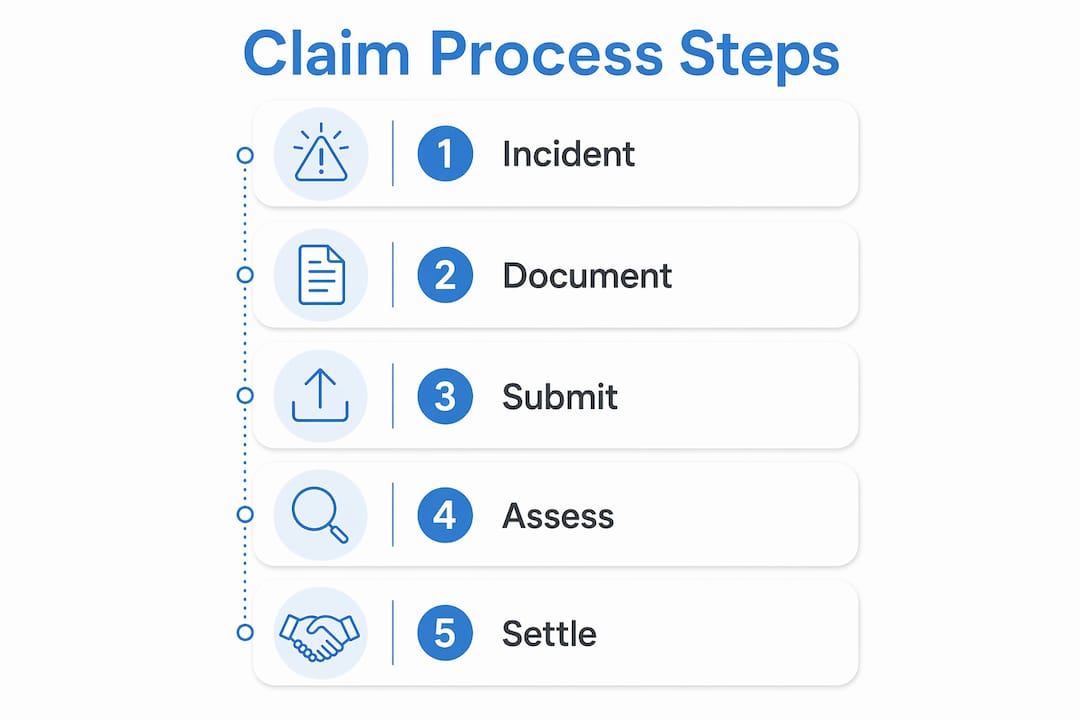
The car accident claim process follows a predictable sequence, though the duration varies depending on injury severity and dispute complexity. Knowing the steps in advance prevents costly mistakes.
- Seek medical attention immediately. Your health comes first, and medical records from day one create an unbroken chain of evidence linking the accident to your injuries.
- Collect evidence at the scene. Photograph the vehicles, road conditions, and any injuries. Get the other driver’s details, licence plate, and insurer information.
- Report the accident to police. A police report number is a key document in the claim process, even for minor accidents.
- Notify your insurer. Report the accident to your own insurer promptly, even if the other driver is at fault.
- Engage a personal injury lawyer. Early legal advice shapes your entire claim strategy and protects you from insurer tactics.
- Lodge your formal claim. In New South Wales, the three-year limitation period applies to most car accident claims. Missing this deadline extinguishes your right to compensation.
- Insurer assessment and negotiation. The at-fault insurer assesses liability and loss, then makes an offer. This phase can take months, particularly for serious injuries.
- Settlement or litigation. Most claims settle through negotiation. If the insurer’s offer is inadequate, your lawyer can escalate to the courts.
Understanding the insurer’s role after a car accident helps you anticipate their tactics and respond strategically. The claim timeline management for serious injuries is particularly complex, as future costs must be fully established before any settlement is finalised.
How is economic loss compensation calculated?
Insurance adjusters evaluate claims using three main factors: liability evidence, available policy limits, and the long-term impact of your injury. That last factor is where most claimants leave money behind.
Compensation for past economic loss is relatively straightforward. You add up documented medical costs, lost wages, and out-of-pocket expenses to the date of settlement. Future economic loss is more complex. Lawyers and courts use actuarial tables, medical expert reports, and your pre-accident income history to project what you would have earned and what care you will need.
Policy limits cap the available funds, regardless of how high your actual damages are. If the at-fault driver’s insurer has a coverage limit lower than your total loss, you may need to pursue other avenues, including your own insurer’s underinsured motorist cover.
One calculation detail that surprises many claimants is the “reasonable value” principle. The billed amount for medical services may not be fully recoverable. Settlement is typically limited to the amount actually accepted by your medical providers as full payment, not the higher figure on the original invoice. This principle, known in legal circles as the Howell rule, means your economic damages figure can be lower than your total bills suggest.
Your degree of fault also reduces your payout proportionally. A claimant found 20% at fault receives 80% of the assessed damages. This is why establishing the other driver’s liability clearly and early is so important to your car accident compensation claim.
What are common challenges when maximising an economic loss claim?
The biggest threat to a fair outcome is accepting an early settlement offer. Insurers settle quickly for less to close files early, and initial offers rarely reflect future medical costs or long-term income loss. Once you sign a settlement, you cannot reopen the claim.
The most common pitfalls claimants face include:
- Accepting the first offer. Early offers are almost always undervalued. Fair settlements must cover current and future medical care and loss of earning capacity, which takes time to quantify accurately.
- Social media activity. Insurance companies monitor claimants’ social media to find inconsistencies. A single photo of you at a social event can be used to argue your injuries are less severe than claimed.
- Failing to document ongoing symptoms. Courts and insurers rely on contemporaneous records. A daily journal of your pain levels, limitations, and expenses is powerful evidence.
- Settling before treatment ends. Most successful claims come from claimants who wait until the full extent of their injury and treatment is established before agreeing to any figure.
- Going without legal representation. Claimants represented by lawyers receive settlements approximately 3.5 times larger than those who handle claims alone. That gap reflects the difference between knowing your rights and guessing at them.
The benefits of no win no fee legal representation mean you can access expert help without upfront costs, removing the financial barrier that leads many claimants to go it alone.
Pro Tip: Keep a daily journal from the day of the accident. Record your pain levels, what activities you could not do, and every expense you incur. This journal becomes one of your strongest pieces of evidence at settlement.
Key takeaways
An economic loss car accident claim succeeds when you document every financial loss thoroughly, act within the three-year limitation period, and resist early settlement offers until the full extent of your injury is known.
| Point | Details |
|---|---|
| Document everything immediately | Collect medical records, pay slips, receipts, and photos from day one to build a complete financial picture. |
| Know what you can claim | Economic damages cover medical costs, lost wages, earning capacity loss, property damage, and out-of-pocket expenses. |
| Understand the calculation rules | Compensation is limited by policy caps and the reasonable value principle, not just your total billed costs. |
| Avoid early settlement | Initial insurer offers rarely cover future costs; wait until your full injury extent is established before agreeing to any figure. |
| Get legal representation | Represented claimants receive settlements approximately 3.5 times larger than those who negotiate alone. |
What I have seen change outcomes in economic loss claims
After years of working with car accident claimants, the pattern is clear. The people who recover the most are not always those with the most severe injuries. They are the ones who treated their claim like a project from day one: organised, patient, and unwilling to accept the first number an insurer put on the table.
The most common misunderstanding I encounter is that economic loss only means medical bills. Claimants routinely forget to claim for domestic assistance, transport costs, and the long-term impact on their career trajectory. A 35-year-old tradesperson who can no longer work at full capacity has a future earning capacity loss that dwarfs their hospital bills. That number only appears in a claim if someone fights for it.
The other thing I see consistently is claimants underestimating how long a thorough claim takes. Patience is not passive. It is a deliberate strategy. Settling at six months when your prognosis is still uncertain is one of the most expensive decisions a claimant can make. The insurer knows this. Their early offer is designed to close the file before the full picture emerges.
My honest advice: get legal advice before you speak to any insurer, keep your social media private and quiet, and do not sign anything until a lawyer has reviewed it. The claim process is not designed to be easy for claimants. Knowing that going in changes how you approach every step.
— Daniel
How Carelawyers can support your accident claim for financial loss
Recovering financially after a car accident requires more than submitting paperwork. It requires knowing what to claim, how to prove it, and when to push back on an insurer’s offer.

Carelawyers specialises in car accident compensation claims across Sydney, with a success rate of over 99% of claims won. The team handles documentation, evidence gathering, and insurer negotiations directly, so you deal with your recovery rather than the legal process. Every client speaks directly to their lawyer, not a case manager or receptionist. Carelawyers operates on a no win no fee basis, meaning there are no upfront costs to access expert representation. To understand exactly what damages you can claim and how economic loss is calculated, speak with the Carelawyers team today.
FAQ
What does economic loss mean in a car accident claim?
Economic loss refers to measurable financial damages caused by a car accident, including medical costs, lost wages, reduced earning capacity, property damage, and out-of-pocket expenses. These are distinct from non-economic damages like pain and suffering.
How long do I have to make an economic loss claim in Australia?
The standard limitation period in New South Wales is three years from the date of the accident. Missing this deadline generally extinguishes your right to compensation, so early legal advice is critical.
Can I claim for future lost wages after a car accident?
Yes. If your injury reduces your ability to work at the same level in the future, you can claim for loss of earning capacity. This is calculated using your pre-accident income, medical expert reports, and actuarial projections.
Should I accept the insurer’s first settlement offer?
No. Initial offers from insurers are typically undervalued and do not account for future medical costs or long-term income loss. Wait until your full injury extent is established and seek legal advice before accepting any figure.
Does having a lawyer really make a difference to my payout?
Claimants represented by lawyers receive settlements approximately 3.5 times larger than unrepresented claimants. Legal representation directly affects both the value and the success of your claim.


