

Brain injury legal claim process: your 2026 guide
The brain injury legal claim process is the formal legal pathway through which injured people and their families pursue compensation for the physical, cognitive, and financial consequences of a brain injury. Most claims must be filed within 2–3 years of the injury date, and missing that window means losing the right to sue entirely. Neuropsychological evidence sits at the heart of every strong claim. Without objective cognitive assessment, insurers and courts have little to work from. This guide walks you through each stage of the process, from the first medical tests to final settlement or trial.
What medical and cognitive assessments does a brain injury claim require?
Neuropsychological testing is the foundation of any brain injury compensation claim. It produces objective, measurable data about memory, attention, processing speed, and executive function. That data gives courts and insurers something concrete to evaluate, rather than relying solely on a claimant’s self-reported symptoms.
The assessment process follows a clear sequence:
- Initial referral. Your lawyer refers you to an accredited neuropsychologist, ideally within weeks of retaining legal representation.
- Testing session. Neuropsychological testing takes anywhere from a few hours to a full day, depending on injury severity and the tests required.
- Validity testing. The neuropsychologist administers Performance Validity Tests (PVTs) and Symptom Validity Tests (SVTs). Defensible reports use PVTs and SVTs to prove credibility and shift the legal focus from claimant believability to objective neurological deficits.
- Report preparation. The written report is typically delivered within a few weeks of testing. It must link test scores to real-world functional impairment, not just list numbers.
- Expert witness role. The neuropsychologist may be called as an expert witness. Under legal frameworks such as CPR Part 35, an expert’s duty is to the court, not to the party who instructed them. That impartiality is what makes the report credible.
Mild traumatic brain injury (TBI) cases face particular scrutiny. Courts assess mild TBI evidence by looking at whether test scores connect meaningfully to actual daily impairment. A report that lists deficits without explaining their real-world impact rarely persuades.
Pro Tip: Book your neuropsychological assessment as early as possible. Early testing is critical because waiting until close to trial risks having expert evidence excluded altogether.

What are the legal deadlines for filing a brain injury claim?
Time limits in personal injury law are strict and unforgiving. Personal injury claims must generally be commenced within 2–3 years from the date of injury or the date the injury was discovered. Miss that deadline and the right to claim is extinguished.
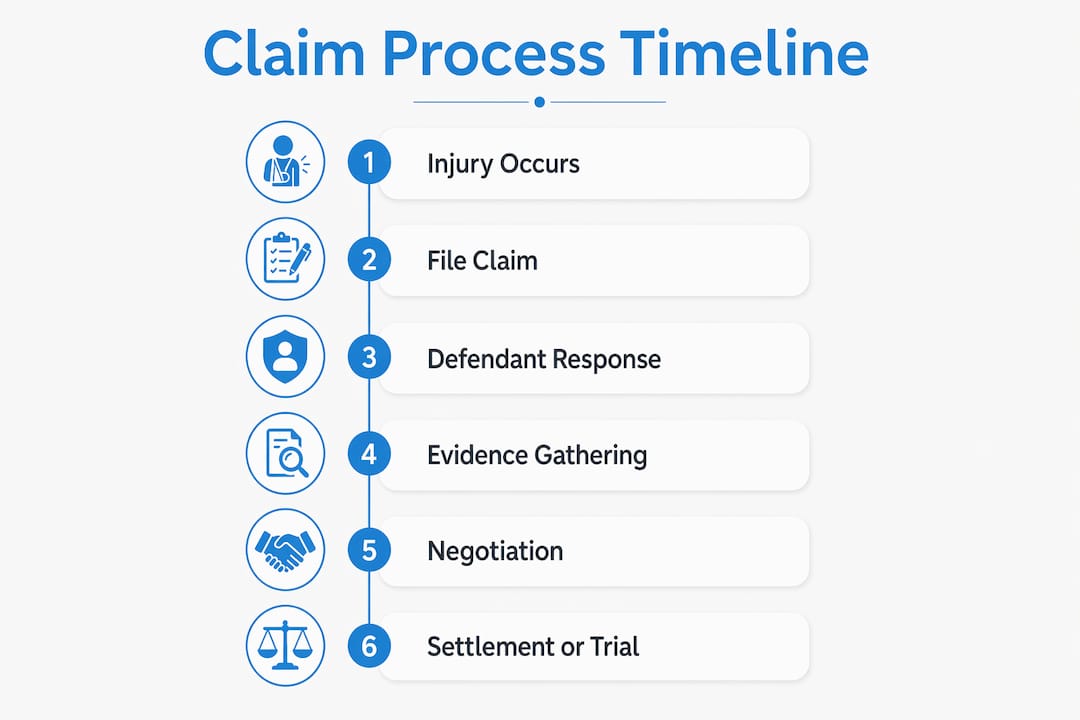
Key procedural steps and deadlines include:
- Statute of limitations. The 2–3 year window applies in most Australian jurisdictions. Exceptions exist for minors, who typically have until a set period after turning 18, and for claimants who lacked legal capacity at the time of injury.
- Claim lodgement. Filing the claim formally notifies the defendant and triggers the legal process. Your lawyer prepares the claim documents, which set out the nature of the injury, the alleged negligence, and the compensation sought.
- Defendant response window. The defendant generally has 20–30 days to file a formal answer after the claim is served. That response shapes the direction of early negotiations.
- Evidence collection. Medical records, workplace reports, witness statements, and expert assessments must be gathered promptly. Evidence clarity diminishes significantly after about a year post-injury, as witness memories fade and physical evidence becomes harder to verify.
- Litigation guardian appointment. Where cognitive impairment affects a claimant’s legal capacity, the court appoints a litigation guardian to act on their behalf. This step must happen early, as it affects every subsequent procedural decision.
The practical lesson here is straightforward. Filing well before the deadline preserves evidence quality, keeps witnesses available, and gives your legal team time to build a thorough case. Waiting until the final months of the limitation period puts everything at risk.
Statistic callout: The defendant’s response window of 20–30 days after claim service is a critical early milestone. It signals whether the matter will move toward negotiation quickly or whether a contested defence is likely.
For a detailed breakdown of how to manage procedural timelines, the Carelawyers guide on serious injury claim timelines is worth reading alongside this article.
How does the legal process progress after the claim is filed?
Once the claim is filed and the defendant has responded, the process moves into investigation and negotiation. This stage is where the quality of your evidence determines the outcome.
The post-filing stages typically unfold as follows:
- Disclosure. Both parties exchange relevant documents, including medical records, employment history, and expert reports. Your neuropsychological assessment report becomes central to this exchange.
- Expert evidence refinement. Lawyers on both sides may commission their own expert reports. A well-constructed, impartial neuropsychological report carries significant weight here. Most brain injury claims settle before trial, largely because strong expert evidence shapes insurer expectations early.
- Negotiations. Settlement discussions can begin at any point after disclosure. Insurers assess the strength of your evidence and the likely court outcome before making offers. A defensible expert report shifts that calculation in your favour.
- Mediation. If direct negotiations stall, the parties may attend mediation. A neutral mediator facilitates discussion and helps both sides reach a resolution without going to court. Carelawyers’ page on claim dispute options explains how this process works in practice.
- Trial. A small proportion of brain injury claims proceed to trial. At trial, your expert witnesses present their findings, and the judge assesses liability and quantum of damages.
Pro Tip: Do not wait for the other side to drive the timeline. Proactive claim timeline management keeps your case moving and prevents insurers from using delay as a negotiating tactic.
The strength of your position at every stage depends on the quality of evidence assembled before negotiations begin. Gaps in documentation or late expert reports give the other side room to dispute your claim.
What special considerations apply when cognitive impairment affects the claim?
Brain injury claimants with significant cognitive impairment face additional legal protections and procedural requirements. Courts treat these claimants with particular care, recognising that reduced capacity affects the ability to instruct a lawyer, understand settlement offers, or make informed decisions.
The table below outlines the key differences between claims involving full legal capacity and those where capacity is impaired.
| Consideration | Full legal capacity | Impaired legal capacity |
|---|---|---|
| Instructing a lawyer | Claimant instructs directly | Litigation guardian instructs on claimant’s behalf |
| Settlement approval | No court approval required | Court approval is required for all settlements |
| Decision-making | Claimant decides independently | Guardian acts in claimant’s best interests |
| Procedural complexity | Standard | Elevated, with additional court oversight |
| Timeline impact | Standard timelines apply | Limitation period may be extended during incapacity |
A litigation guardian is typically a family member, close friend, or professional appointed by the court. Their role is to protect the claimant’s interests throughout the legal process. Courts are particularly cautious when cognitive impairment is involved, and no settlement can be finalised without judicial approval. That approval process examines whether the settlement amount genuinely reflects the claimant’s losses and future needs.
For families supporting a loved one through this process, understanding these protections matters. The legal system builds in these safeguards precisely because brain injury claimants are among the most vulnerable people in personal injury law.
Key takeaways
A successful brain injury legal claim depends on early action, credible neuropsychological evidence, and strict adherence to procedural deadlines.
| Point | Details |
|---|---|
| Act within the time limit | Personal injury claims must generally be filed within 2–3 years of injury or the right to claim is lost. |
| Test early, test thoroughly | Neuropsychological testing should begin as soon as possible to avoid evidence being excluded near trial. |
| Validity tests strengthen reports | PVTs and SVTs shift court focus from claimant credibility to objective neurological deficits. |
| Most claims settle before trial | Strong expert evidence shapes insurer expectations and drives earlier, better settlement outcomes. |
| Capacity triggers extra protections | Claimants with cognitive impairment need a litigation guardian, and all settlements require court approval. |
What I have learned from watching brain injury claims go wrong
Working with brain injury claimants over many years, the pattern that causes the most damage is not bad luck. It is delay. Families wait months before consulting a lawyer, assuming the injury needs to stabilise before legal action makes sense. By the time they act, witness memories have softened, medical records are incomplete, and the neuropsychological baseline that would have been most useful is gone.
The second most common mistake is treating the expert report as an afterthought. Some claimants arrive at negotiations with a thin, one-page summary from a general practitioner and wonder why the insurer is not taking the claim seriously. A defensible neuropsychological report, built on validated testing and written by an impartial expert, is not a formality. It is the engine of the claim.
The third thing I have observed is that claimants underestimate how much the legal process tests their endurance. Brain injury claims are not resolved in weeks. They take months, sometimes years. Choosing a lawyer who specialises in serious injury matters, communicates clearly, and manages timelines actively makes a measurable difference to both the outcome and the experience. Generic personal injury firms often lack the neuropsychological literacy to interrogate expert reports or challenge the other side’s evidence effectively.
My honest advice: consult a specialist lawyer within weeks of the injury, not months. Get the neuropsychological assessment booked before you think you need it. And understand what types of damages you are entitled to claim, because many families leave significant compensation on the table simply because they did not know it existed.
— Daniel
How Carelawyers supports brain injury claimants
Brain injury claims are among the most complex personal injury matters in Australian law. Carelawyers specialises in serious injury cases, including brain injury claims, and works directly with clients rather than passing files between junior staff.

Carelawyers operates on a no win, no fee basis, so legal costs are not a barrier to getting proper representation. The team guides clients through every stage, from the first neuropsychological referral to final settlement or court. If you are unsure where your claim stands, or whether you are within the limitation period, a confidential consultation with Carelawyers is the right first step. Visit the personal injury lawyers page to learn more about how Carelawyers handles brain injury matters and what compensation you may be entitled to claim.
FAQ
How long does a brain injury legal claim take?
Most brain injury claims take between one and three years to resolve, depending on injury complexity, evidence quality, and whether the matter settles or proceeds to trial. Claims involving cognitive impairment and litigation guardians typically take longer due to additional court oversight requirements.
What is the time limit for filing a brain injury claim in Australia?
Personal injury claims must generally be commenced within 2–3 years of the injury date. Exceptions apply for minors and claimants who lacked legal capacity at the time of injury, which can extend the limitation period.
Why is neuropsychological testing important for a brain injury claim?
Neuropsychological testing produces objective, quantifiable evidence of cognitive deficits that courts and insurers can assess. Reports incorporating PVTs and SVTs are particularly persuasive because they demonstrate credibility and link test results to real-world functional impairment.
What happens if a brain injury claimant cannot make their own legal decisions?
The court appoints a litigation guardian to instruct the lawyer and make decisions on the claimant’s behalf. Any settlement reached must receive court approval to confirm it genuinely serves the claimant’s best interests.
Do most brain injury claims go to trial?
Most brain injury claims settle before trial. Strong neuropsychological expert evidence shapes insurer expectations during negotiations and significantly increases the likelihood of an earlier settlement at a fair amount.


